This spring I tried to make two significant ‘life’ things happen:
- Leave the UK
- Sell my MTB

No. 1 is a work in progress. At the time of writing, I’ve left for at least a few months but the hope is that it will be considerably longer. That’s all paperwork depending, so I’ll tell you about that when I know what is actually happening.
No. 2 was related to the above, but wasn’t much of a success. I needed to put my stuff in storage over summer, and was finding it harder and harder to justify keeping the MTB. It’s big, bulky and takes up a lot of space. Wherever I end up moving too, it’s unlikely I’ll have enough room for it (I don’t have imminent plans to leave city-life) and I’m doubtful that I’ll end up anywhere remotely mountainous. Let’s be honest: I’m hardly limited on the bike-front, with both my RTW tourer and a road bike at my disposal.

The MTB, a Marin Pine Mountain 1 to be precise, has served me so well over the years on many great adventures. My problem is that I get so attached to the bikes that take me to magical places. While some of those trips have had fairly miserable moments, many have been genuinely life-changing trips. It’s been hard to accept that I should probably sell it. Even if I do stay in London, it only comes out of the shed once or twice a year for one big ride. When I make my millions and have a garage to keep it in, I’ll be rich enough to buy a much better one anyway!
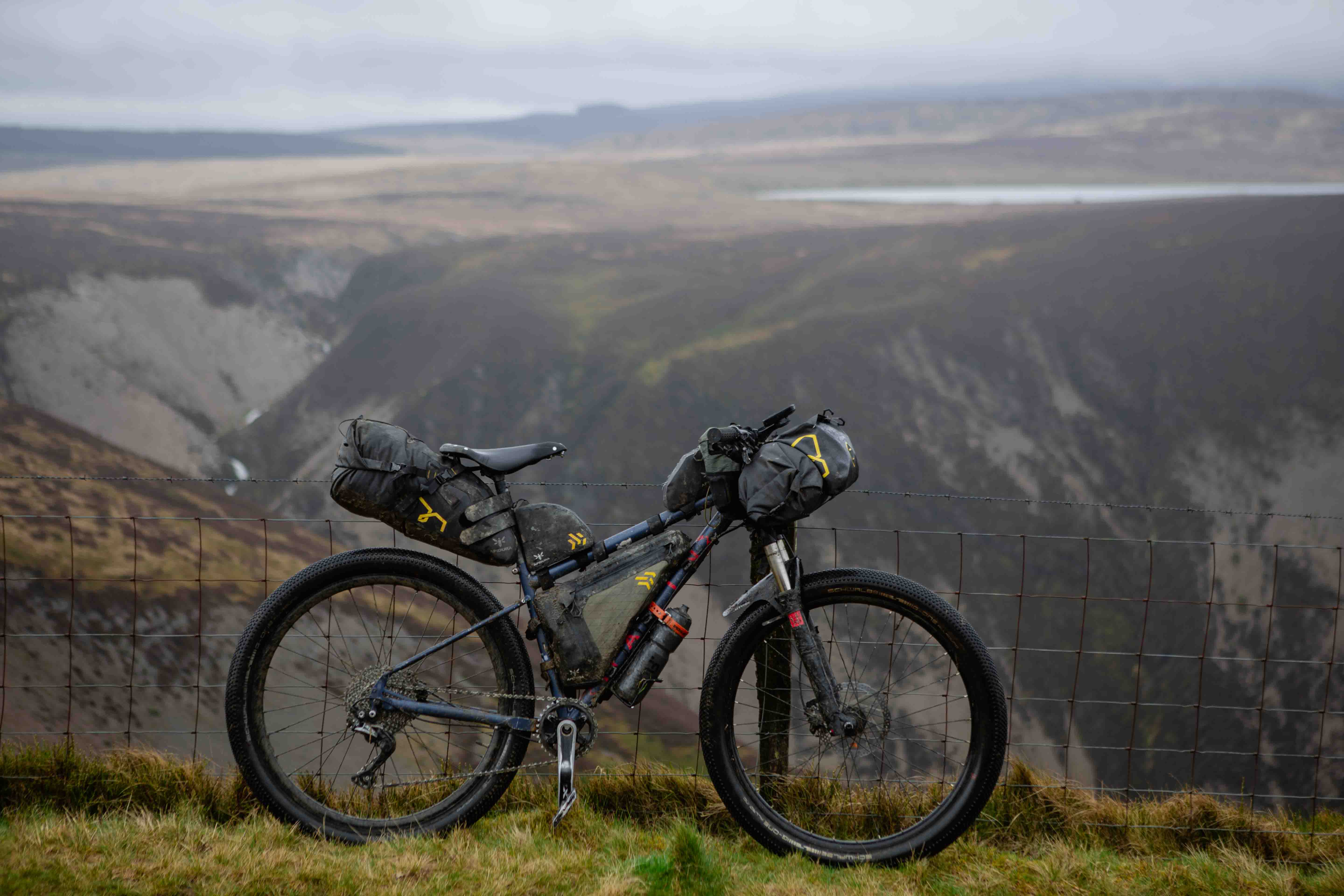
I had no luck selling it. It’s battle-worn, with plenty of scars in the form of paint-rub from the straps of bikepacking bags that have carried my stuff over mountains. It’s a bad time to be selling a bike – the industry still has surplus stock post-COVID and not enough demand to meet it. You can easily find new bikes for 40% off these days. Still – if anyone’s interested, let me know. Size small. Would love to see it go to a good home.

With my two new goals on the horizon, it suddenly occurred to me that there were still places I wanted to ride in the UK on that bike. It’s funny how it’s always when a deadline finally nears that you realise how much there is still left to do.
There was one specific UK route that had been on the bucket-list for years: the Trans-Cambrian Way. I must have heard about it in 2018, around the time I first started working at Apidura, acquired the Marin, and started learning about off-road touring in the UK. I’ve pedalled so much of the UK over the last 6 years, but never made it to Wales with my MTB.

The Trans-Cambrian Way is a 160km route across the Cambrian Mountains, some of the oldest mountains in Europe, It includes nearly 4,000m of climbing, across the hills through sparsely populated Welsh valleys. It’s one of the most iconic off-road bikepacking routes in the UK.

Last summer, Cycling UK announced the Traws Eryri route which, conveniently, starts near Machynlleth – around where the TCW finishes. An old classic could be combined with a new route, linking together to create a meandering route across the whole country. Perfect.
Easter Monday was a little early in the year for my outdoor preferences (early April can be dodgy anywhere in the UK), but the available weekends were limited – so I booked the week off work and set off to ride both routes over 6 days. I hoped that would be a relaxed tempo across the hills.
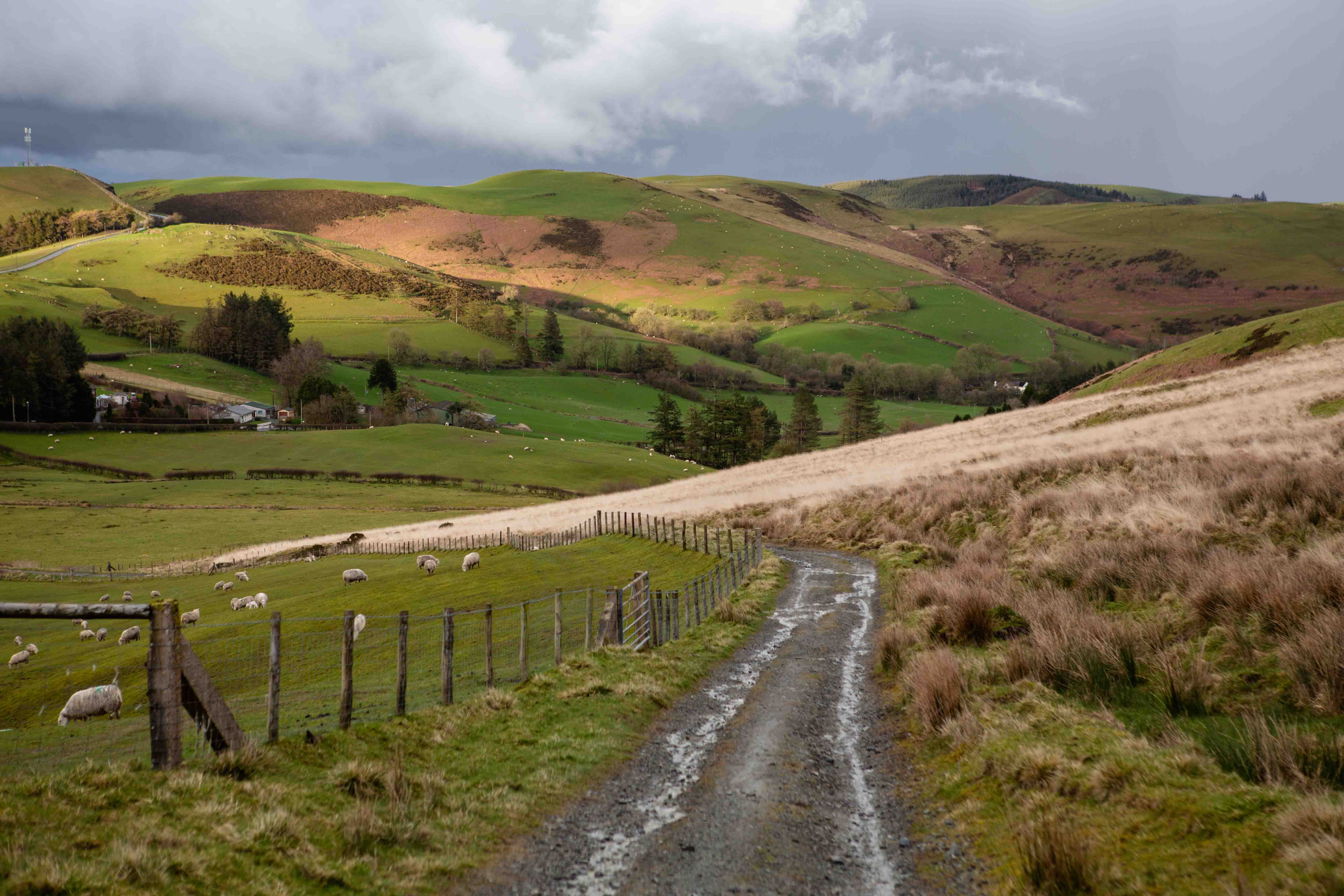
Getting to Wales can be real a faff. It took a large chunk of the first day getting from London to Knighton, a small town straddling the border between Powys, Wales and Shropshire, England.
It was a beautiful day, and I was reminded how great this time of year is when the weather is behaving. Leaves are starting to appear on the trees, lambs are out (in their millions) and the sun cuts through the cold air in a way that cuts straight through to your wintery soul.
It didn’t take long before the TCW got the legs burning, with a long muddy climb taking you to Beacon Hill. I knew my tyres – the 2.8” Schwalbe G-Ones I’ve had on since my long tour across Spain and Morocco two years ago – wouldn’t be particularly sensible, but I couldn’t be bothered to change them, especially if I’d be selling the bike afterwards. Credit where it’s due – they have plenty of tread left, even after thousands of kilometres. But it’s still the tread that is the problem, or rather the lack of. They were great on the mountainous dirt roads of Andalucia & sandy tracks of North Africa. In the Alps last summer they were ‘OK’ because everything was bone dry. Here in Wales, after an insanely wet spring, it was like cycling on an ice rink at times.

Despite my sunny first afternoon, the forecast didn’t suggest it would be improving in early April. I’d been checking my phone daily ever since booking my train tickets, in the hope that I’d get some dry conditions. But that was looking less likely every time I looked, thanks to a certain Storm Kathlees that was due to arrive in the middle of my grand adventure.

As my departure date neared, I’d decided to do what I almost never do at the start of a bikepacking trip: look into accommodation options that I might be able to book in advance. Conveniently, Rhayader was just 55 km from the start in Knighton, about a third of the TCW. It didn’t look like there was a campsite in town (although in hindsight I saw some other cyclists packing up a tent in Wyeside Caravan Park so you can probably pitch there). There was, however, an Airbnb host who’d made a patch of their garden available for camping for £8 a night. With my lunchtime start, it was unlikely I’d get to town long before dusk – so I locked that in.

To my delight, as I finally started receiving phone signal on my final tarmac descent towards Rhayader, I received a message from my host asking if I’d prefer to stay inside. They also rented an inside room out, but it was vacant this evening and I could have it for the same price if I’d like. With heavy rain forecast overnight, I didn’t take much persuading.
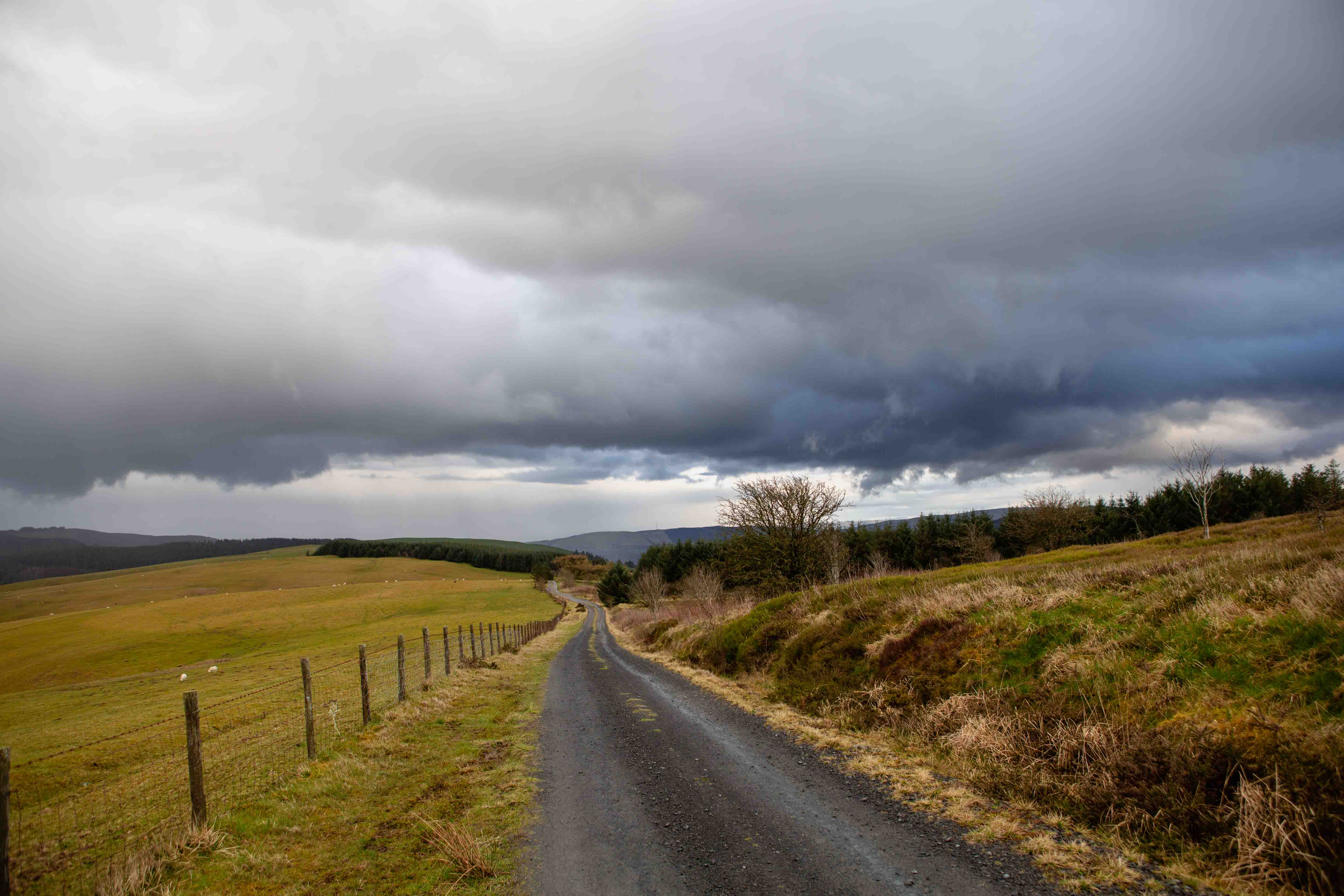
By the time I arrived, I was caked in mud head to toe, extremely relieved not to be climbing into my tent in this state. I was far, far filthier than I’d expected to be this early on the tour. Not ideal, considering I was pretty much wearing all the clothes I was carrying.
I cleaned up and wandered into town in search of some food. It was a clear, crisp evening. And most importantly, it was dry. I checked my map to see where I cycled when I crossed Wales two years ago riding the Lon Las Cymru route. I had indeed passed straight through here. I had a vague recollection of the roundabout in the middle of town, but that was about it.
Rhayader is like many small Welsh towns. A few pubs to choose between, a fish ‘n’ chips shop, a kebab place, and/or a Chinese. Bikepacking still brings out the cheapskate in me, I’m not entirely sure why. It’s probably because I reminisce about the simple days cycling around the world, with every decision guided on what would help my pennies stretch the longest. So as I wandered back to my room for the night, I was rather chuffed to have secured a dry bed, dinner and a beer for less £15.

In the morning I washed my bike down with my host’s garden hose, wondering if it was even worth it, before pedalling onwards. (Spoiler alert: it wasn’t).
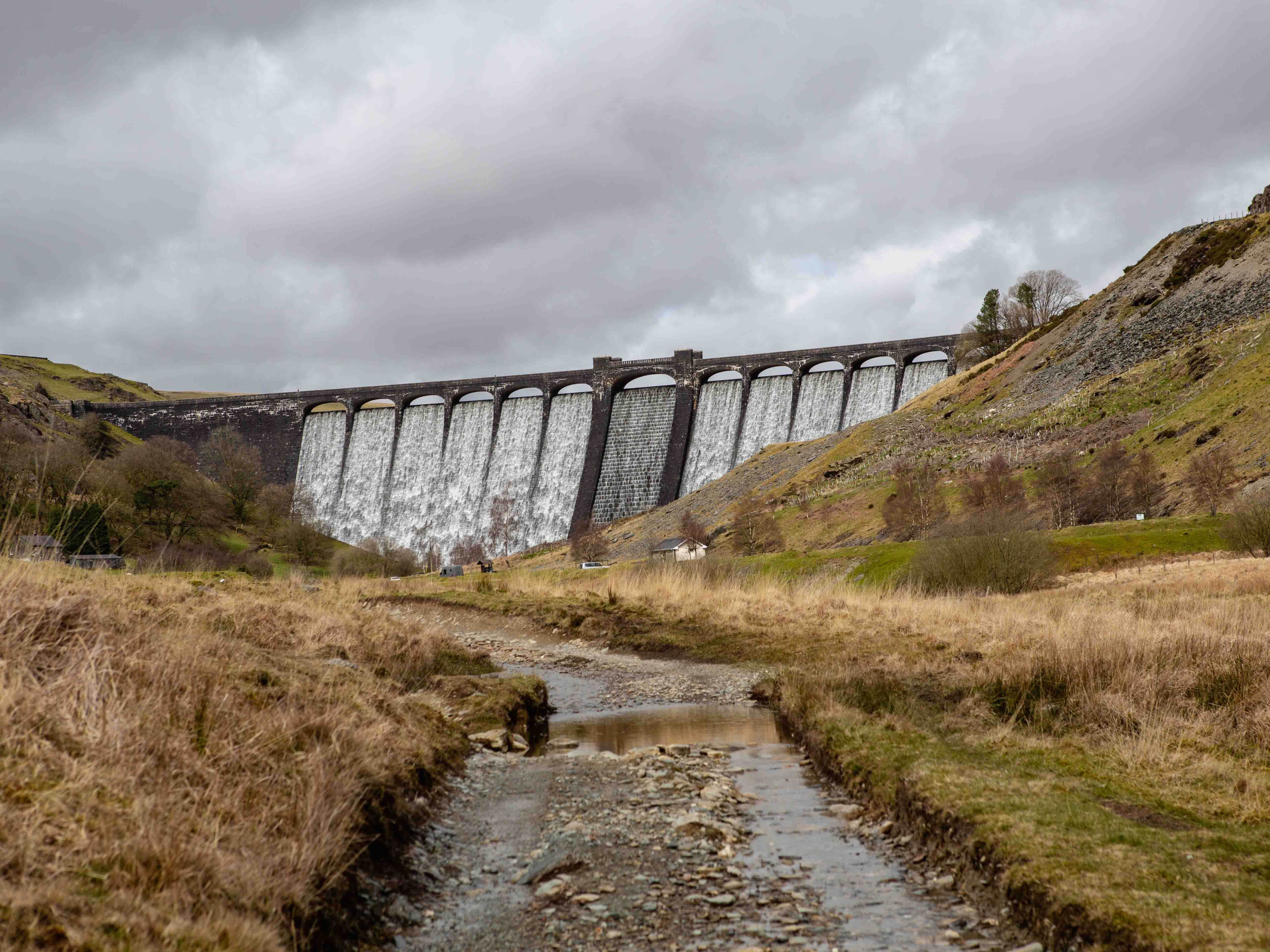
I was excited about the day ahead. For years I’ve wanted to ride the Claerwen Dam, and I’d marked Nants Bothy as the perfect place to break up my 3-day TCW with another indoor sleep.
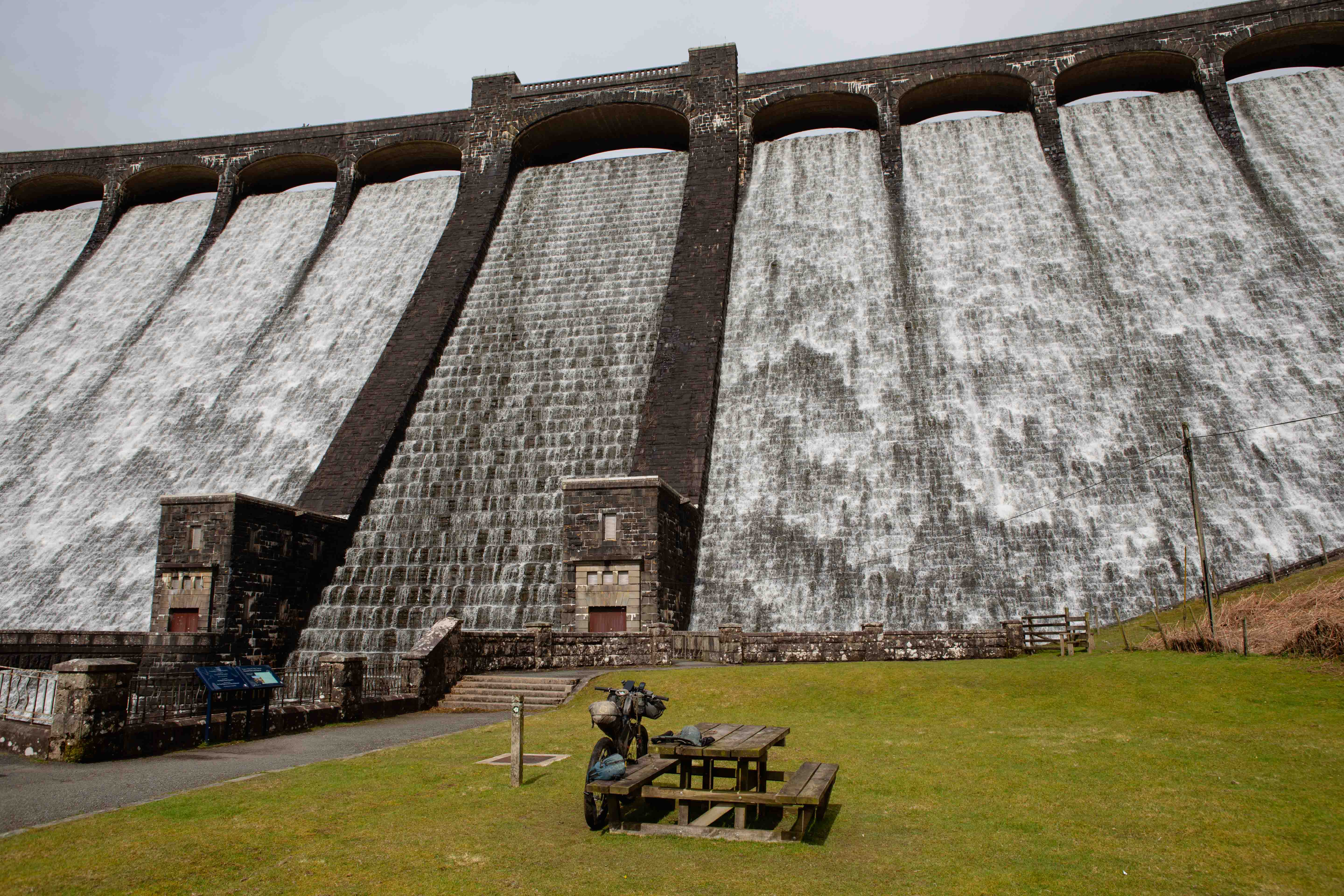
I only saw two other cyclists on the whole route, both of whom this morning on the stretch into Elan Valley, along doubletrack towards the reservoir. They were both locals, which made me feel embarrassed when they said where they were cycling to, because the only places I could name were the 3 towns I was passing through on the route. Unfortunately I could only pronounce one of them with confidence, which was even more embarrassing when they asked where I was heading towards.
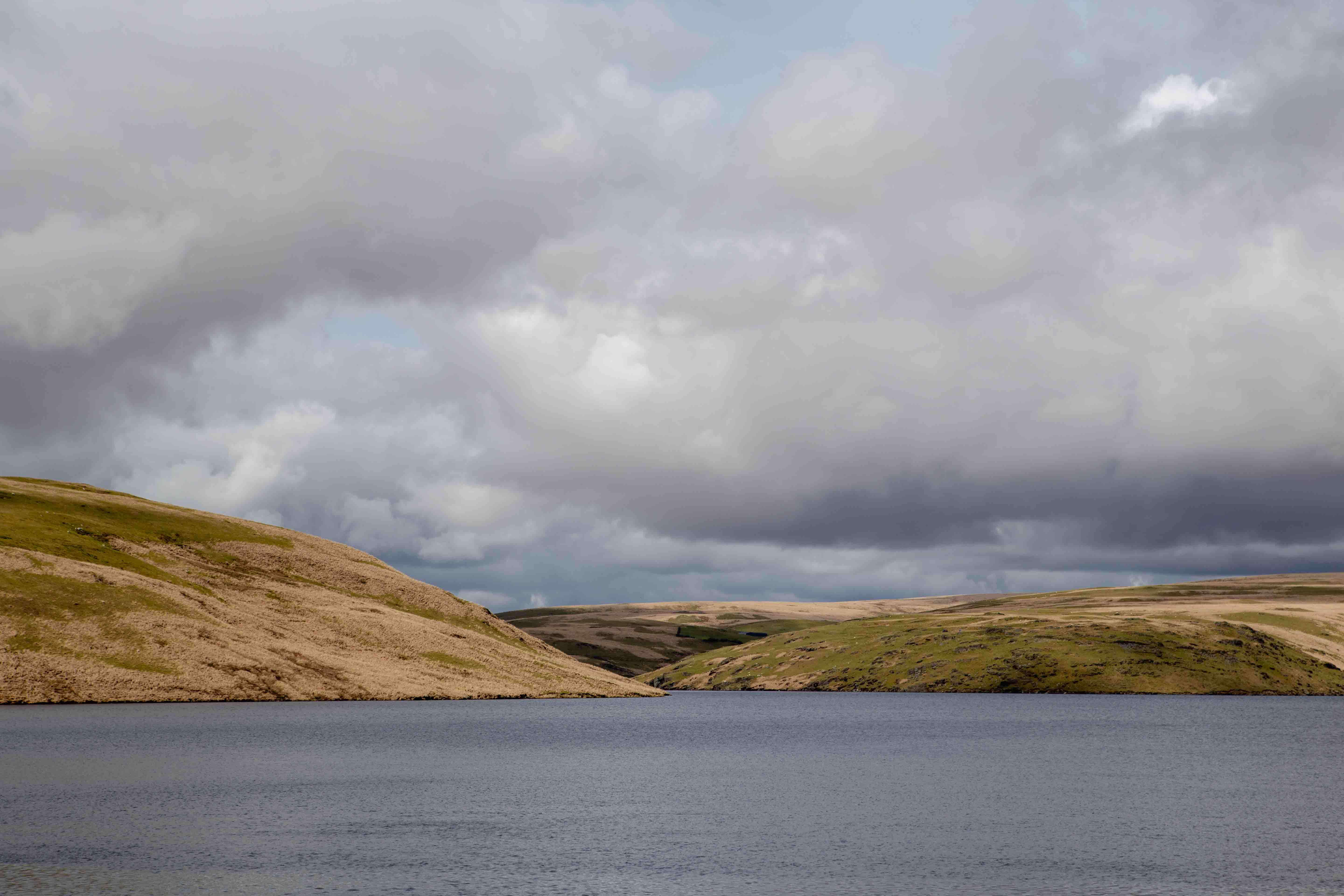
They both complained about the weather, and the resulting trail conditions (much of the doubletrack road was completely submerged) before reassuring me that it was usually like this anyway. I was beginning to wonder if my feet would ever be dry again on this trip.

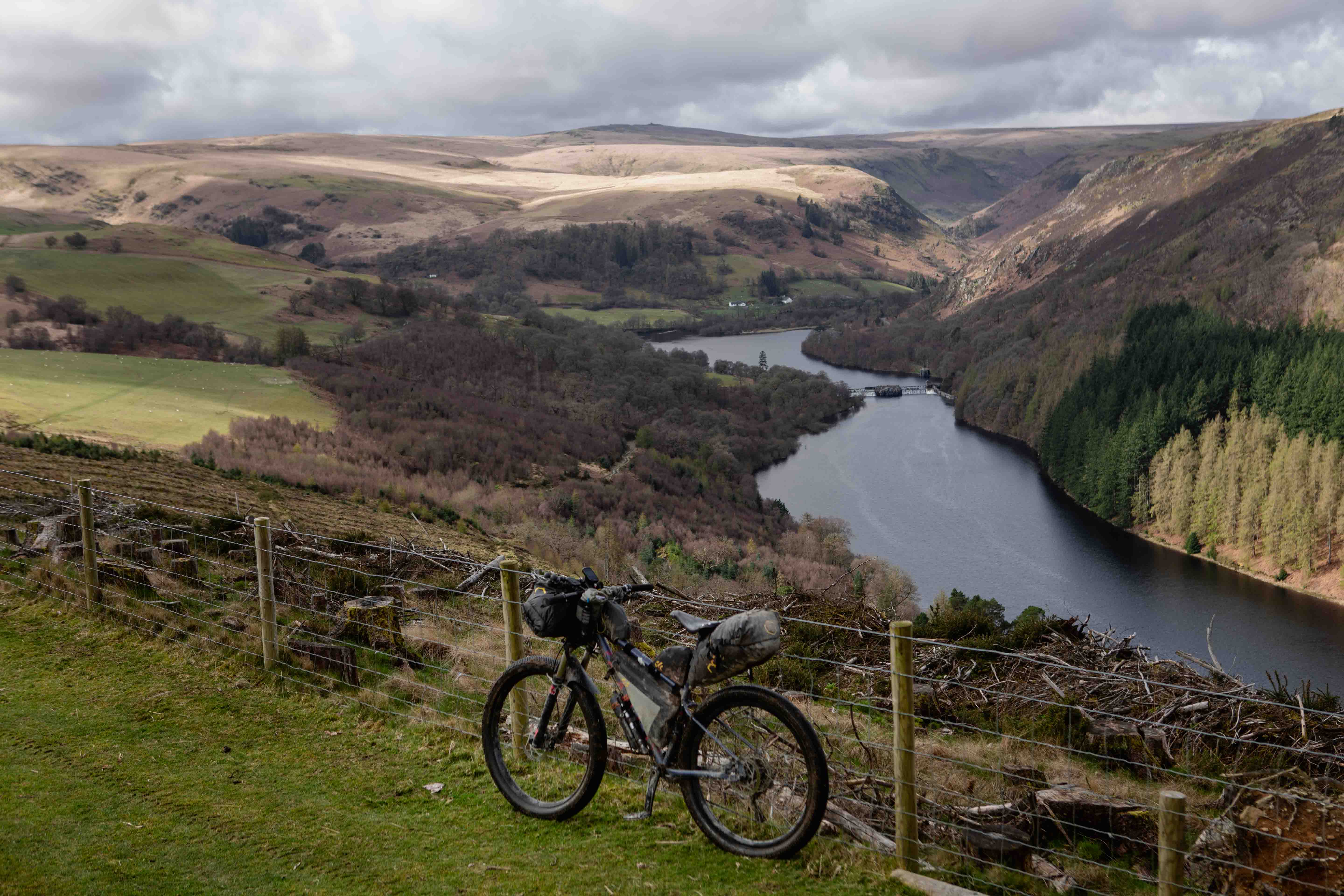
Claerwen dam is really a sight to behold, but the real magic is the water-side riding that awaits as you skirt the reservoir on a wonderful dirt road. This is the Desert of Wales, and it really feels like nowhere else I’ve seen in the UK.

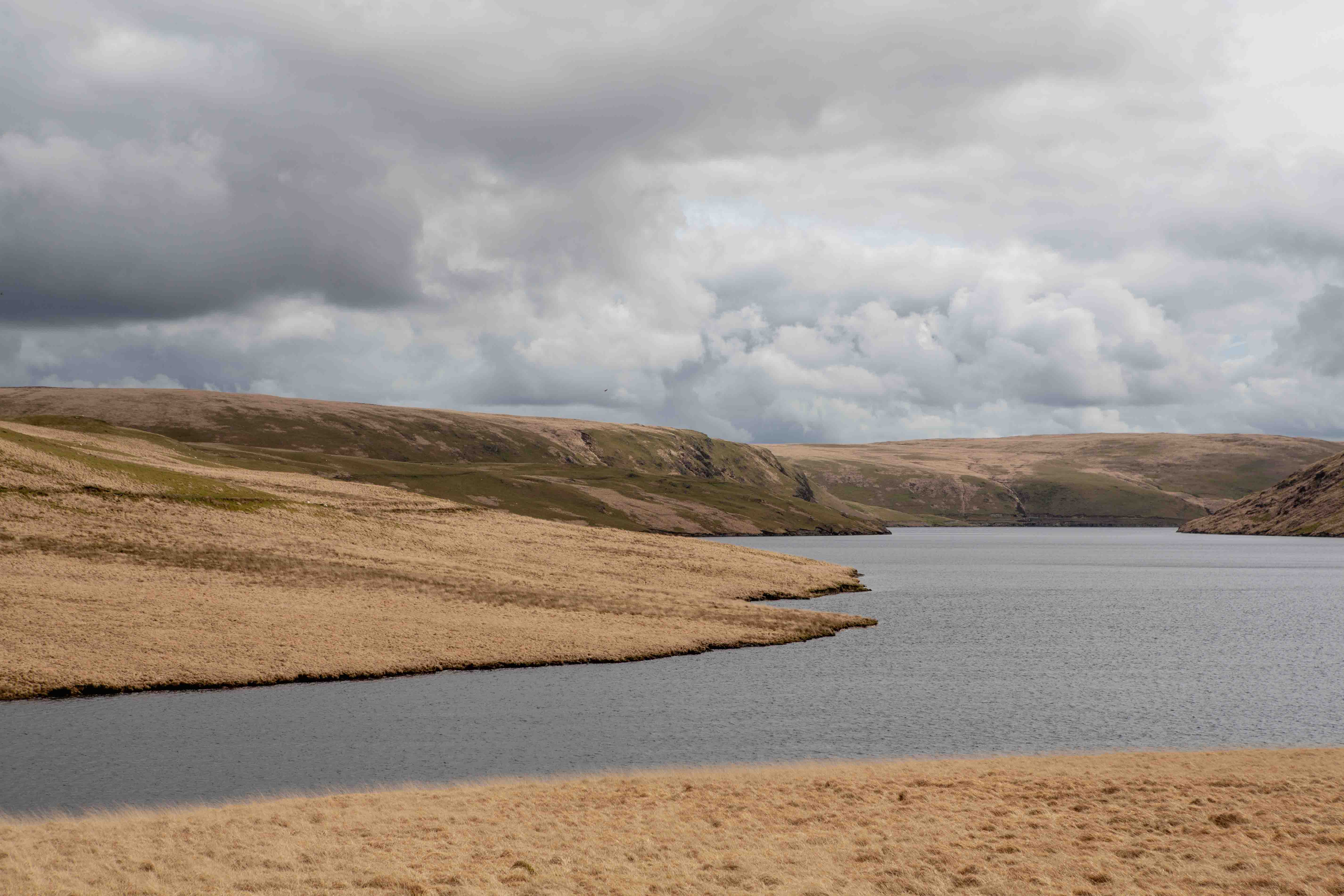
I reached Nants Bothy after 65 km, and was slightly disappointed to hear voices inside as I neared. I was feeling exhausted after a rainy end to the day, and was quietly hoping for a quiet night with my book.
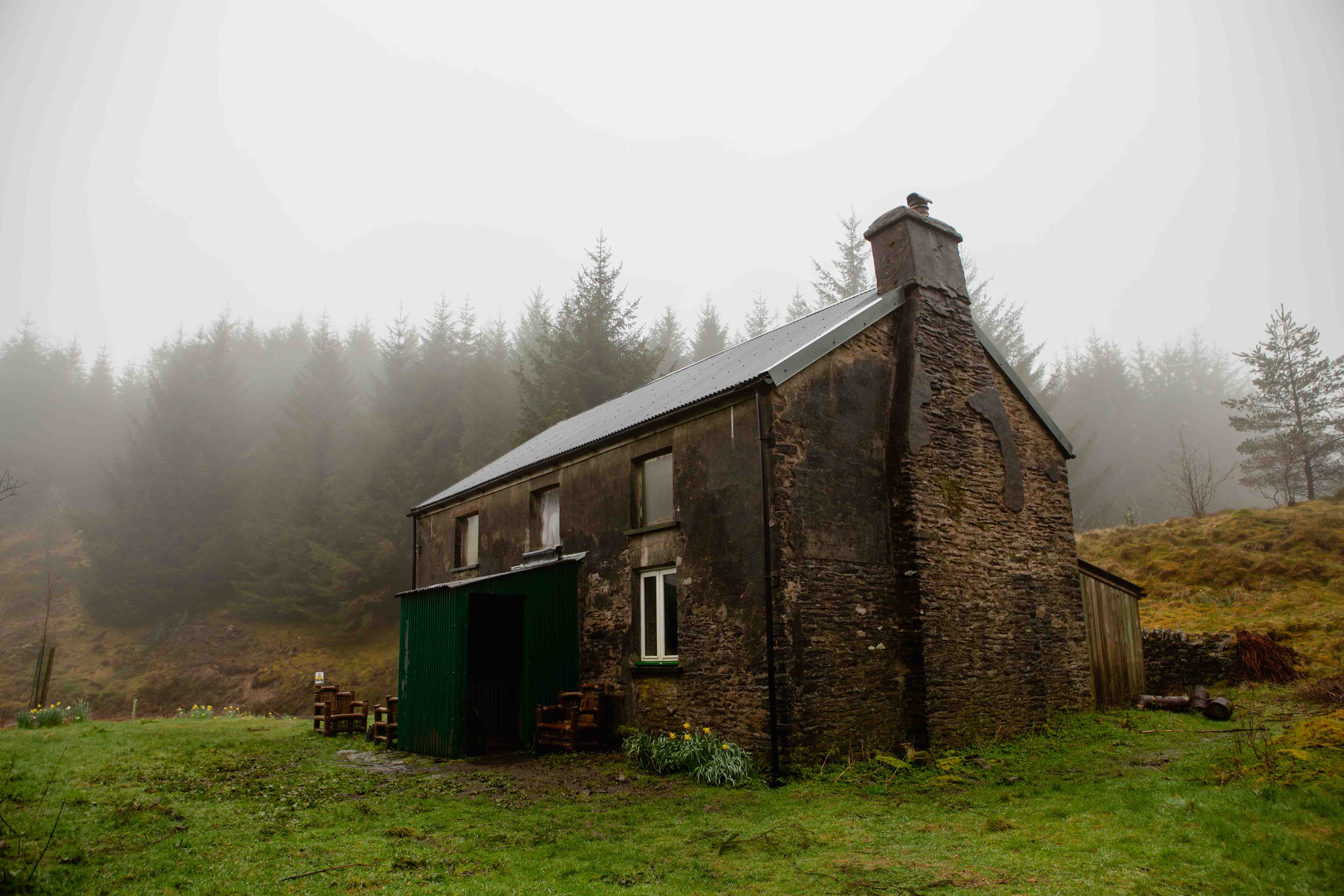
It was quite luxurious bothy really. My companions were a group of 4 middle-aged men, out on a seemingly aimless 3 day hike around the surrounding hills. They were armed with massive paper maps, which they poured over debating what was public access and what bogs they might encounter during shortcuts.
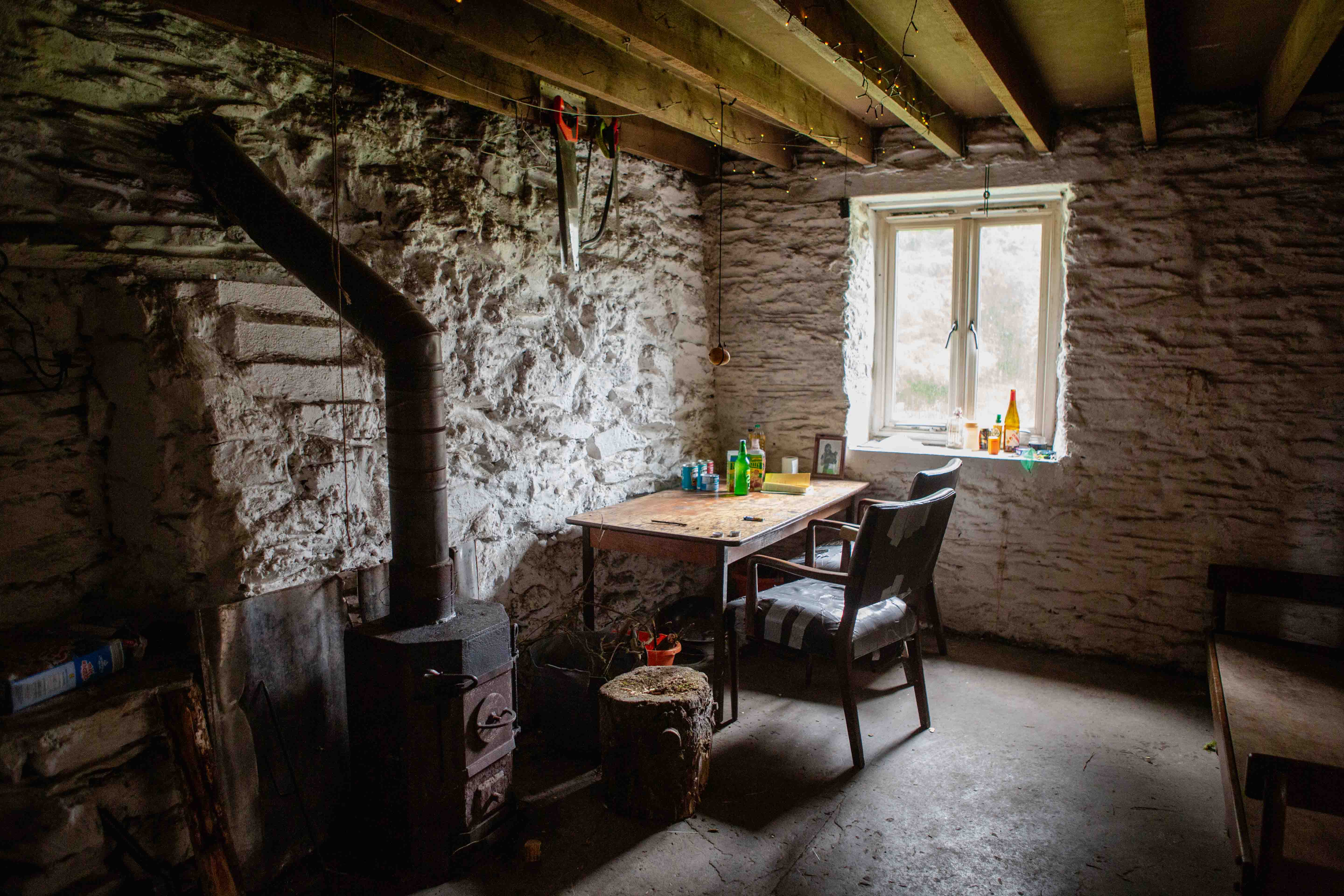
They knew what they were doing though. They’d already been down to the nearest river and were in the process of filtering their freshly collected water. They’d found some suitable firewood and had lit a fire, saving me the embarrassment (and inevitable failure) of attempting to get one going myself. They were carrying camping meals (and every other snack they might possibly need during the trip) and were carefully counting the calories of their snacks. For once, I actually had a camping meal as well, having recently developed a soft spot for Decathlon’s spaghetti bolognese.
The fire meant I could actually dry some clothes, which was a godsend. Even better was the whisky they whipped out in little plastic bottles, which I was invited to help them ‘lighten the load’ of. But best of all was the night inside, sheltered from the horrible conditions that surrounded our refuge.
It wasn’t the best night’s sleep, accompanied by 4 snoring men and some very active nocturnal mice, but I was glad to be warm and dry. We’d done a good job on the whiskey, sharing stories by the fire, which had probably helped. I think I’d been asleep before my head even touched the pillow.

My new acquaintances were a mixture of teachers, and those working in an outdoor centre/school that facilitated the Duke of Edinburgh program. I told them that, having discovered a ‘love for the great outdoors’ in my mid-20s, that I wished I’d had such active teachers and an opportunity to do something like the DofE. The truth is, I probably did – I bet I was just so uninterested during my teenage years.
They left in the morning, and I read my book for a couple of hours watching the rain fall. It was truly ghastly outside. We were buried in low clouds and the drizzle was relentless. Eventually I got bored and ventured outside, but I can’t say the first few hours of pedalling were particularly pleasant.

A day and a half ago I’d been leaving the comforts of my home in South London, and had just spent the night in a magical bothy with a bunch of strangers nestled away in a remote forest. Now I was riding across empty moorland through eerie low clouds that hung still without any wind. You can really find some wild landscapes in the UK if you’re prepared to search them out.
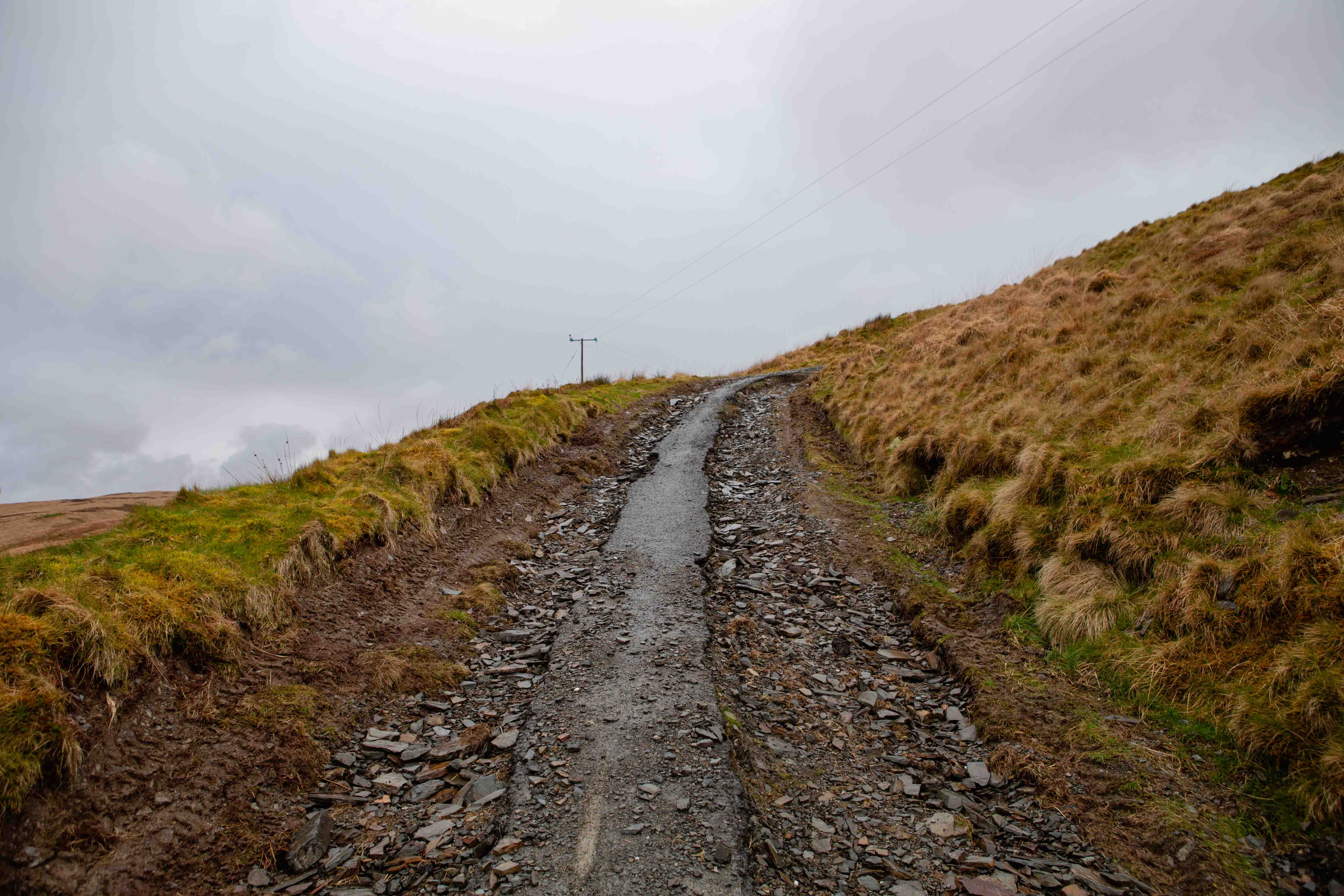
As the rain finally eased up, I was treated to my favourite section of the entire route. The climb up to Glaslyn lake was tough, but then this amazing slate track takes you down into the next valley. I’ll let the photos do the talking…
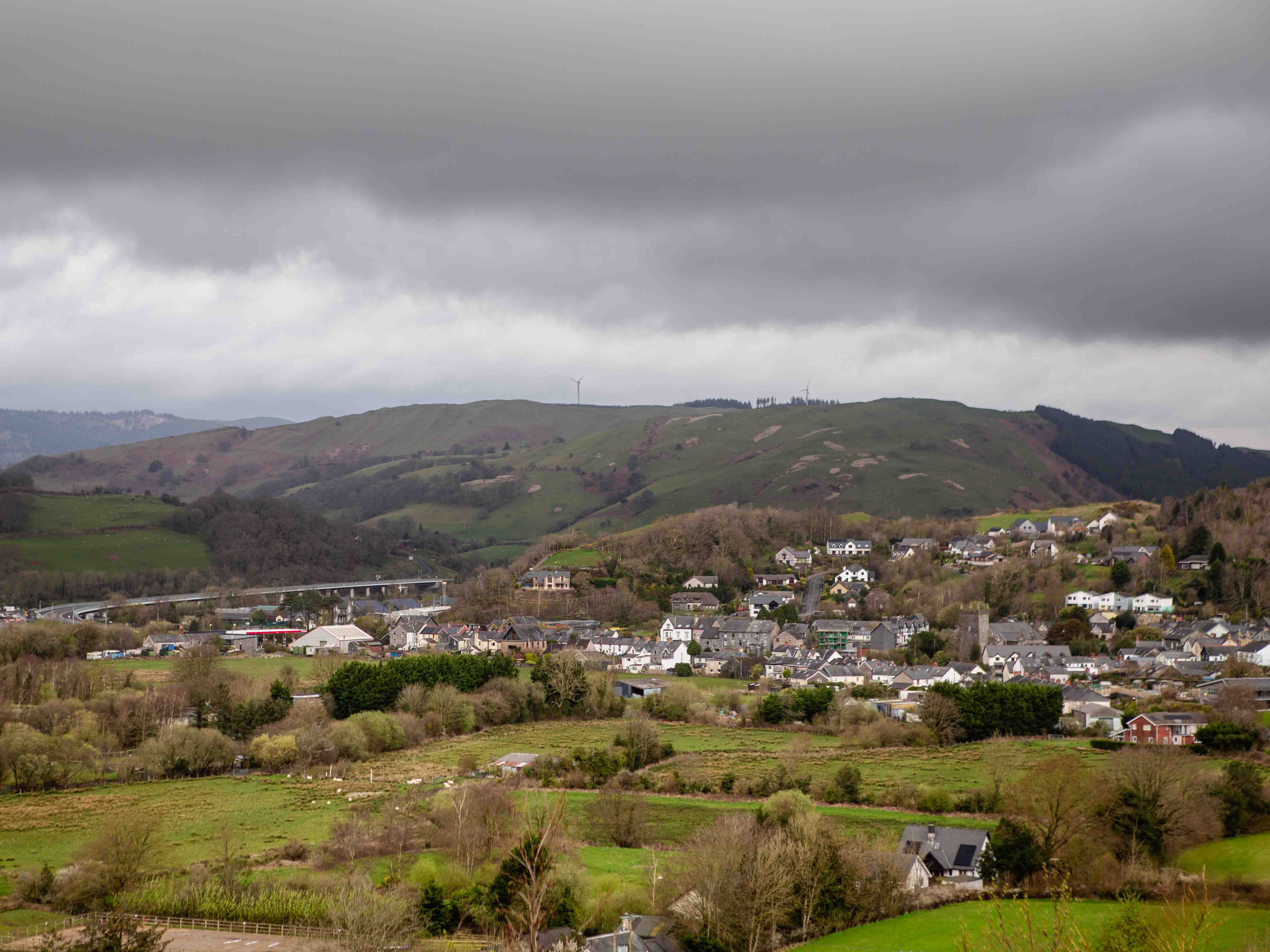
I got on with it while there was a break in the weather, and rolled into Machynlleth mid-afternoon. Before leaving home, I’d also booked my final night on the TCW, pleasantly surprised to find a private room for £30. That’s pretty good, by UK standards.
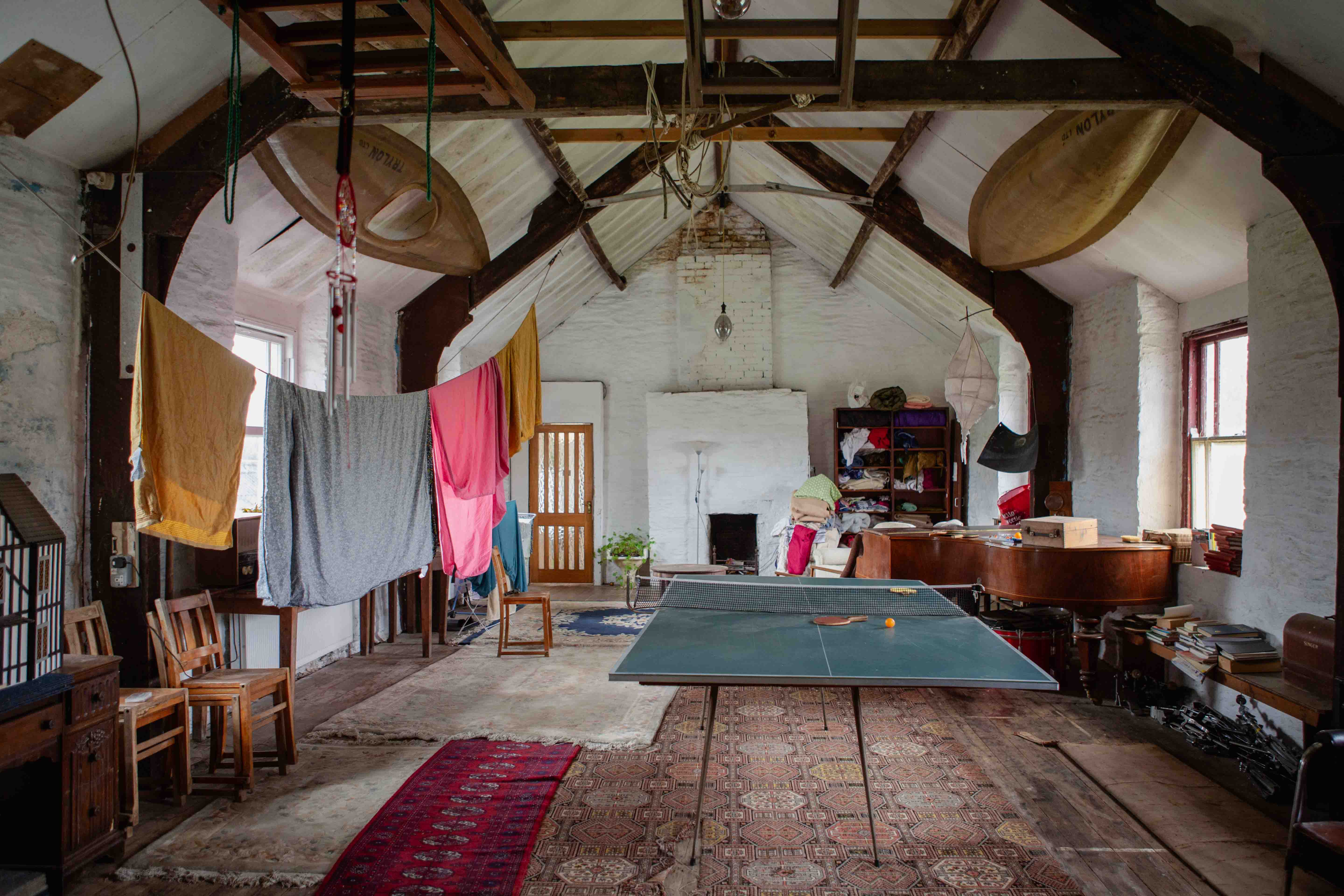
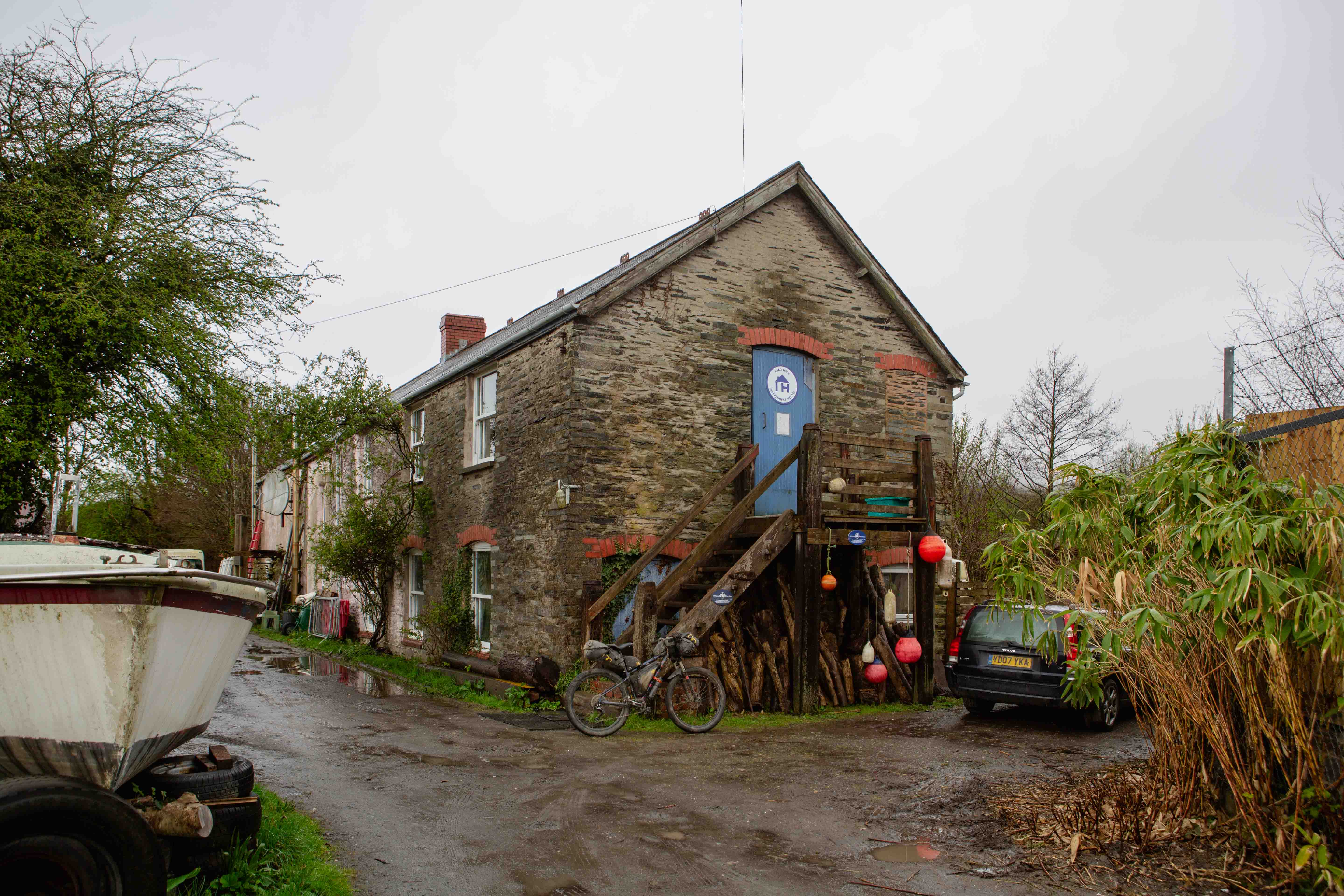
The hostel was a strange building, totally ramshackle, but perhaps what you’d expect at that price point. I was quite content with a shower, a working communal kitchen, and a Coop selling oven-pizzas just a 2-min walk away.
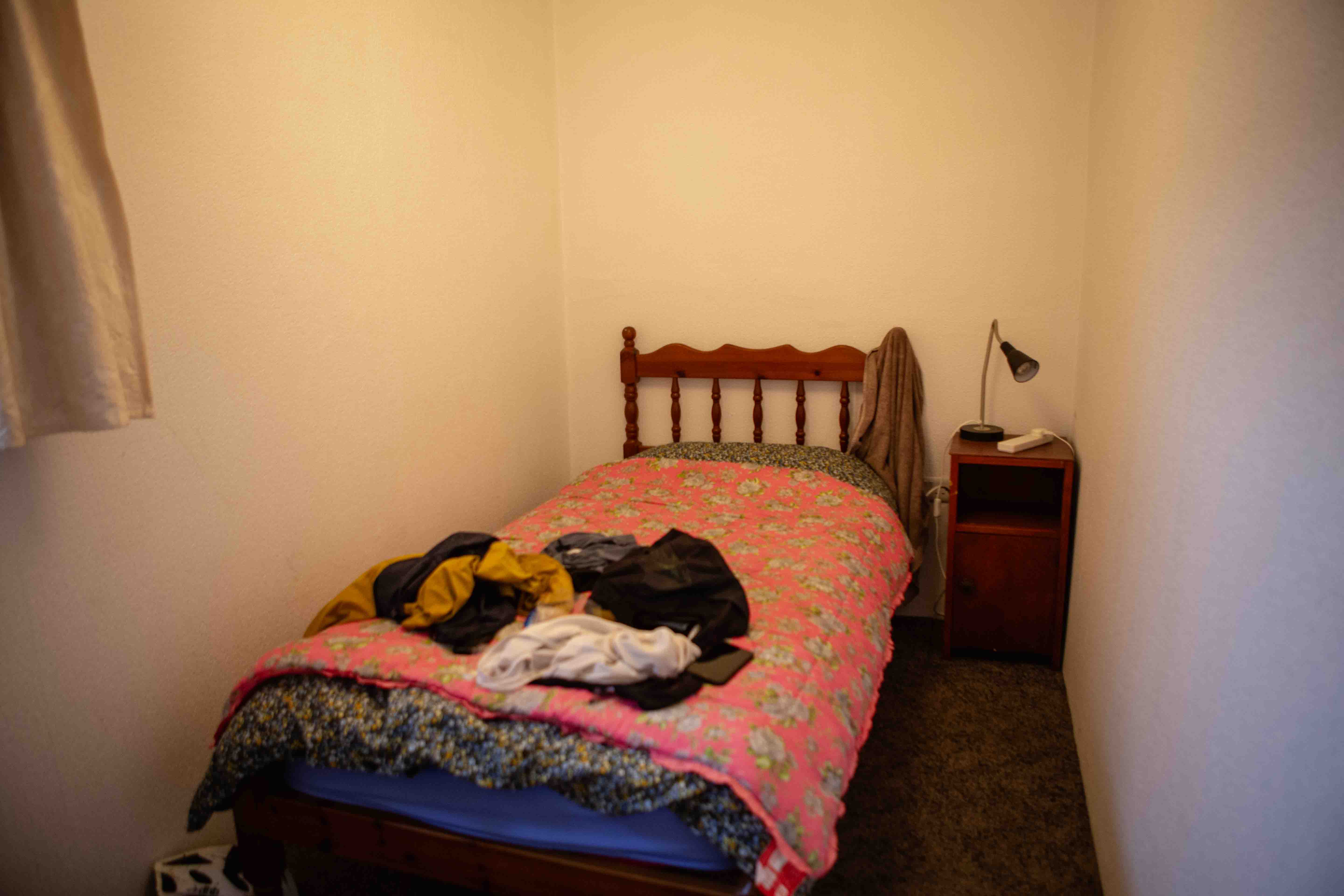
There was a group of 3 other cyclists staying there, riding the Lon Las Cymru. I was reminded that the route came through Machynlleth, and again felt a little silly that I’d not even remembered that. Sometimes I worry about my memory.
And so that was it for the TCW, the next day I’d start heading north on a new route: Traw Eyri. I’ll tell you about that next time…
 JKB's Bike Ride