Last year, Cycling UK announced the launch of a new off-road bikepacking route called the Traws Eryri. A 200 km trail across the landscapes of North Wales and Snowdonia National Park.
For a few years I’ve been eyeing up a potential North-South MTB ride across Wales. There’s plenty of options and routes you can join up to cross the country, but when I saw the Traws Eryr launch I immediately thought: that would be cool to join up with the Trans-Cambrian Way to create a real epic week-long trip in Wales.
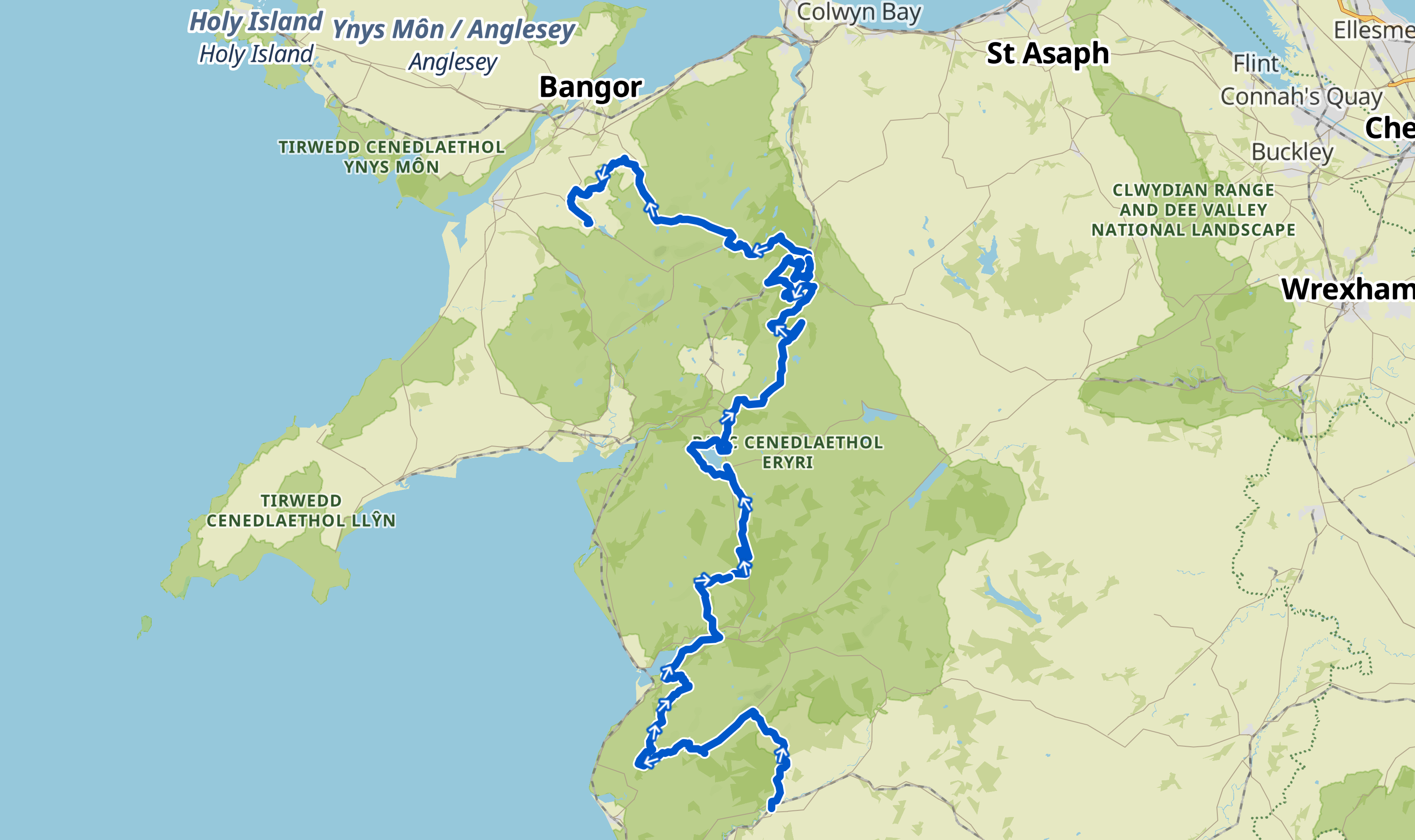
And so, when I finally made it out to ride the TCW in April, I knew I wanted to extend the holiday and add on the Traws Eryri. I have a friend living in Llanberis, so I’d skip the final 25km that leads you to Conwy, and instead detour over to Llanberis, before riding down to Bangor from where you can take the train back to London.

I’d be turning 32 in the end of May, which might not sound like a significant birthday, but it would mean the end of my 26-30 Railcard – which has allowed me to save a third of the railfare on so many bikepacking adventures in the UK. I mean, really quite a few: South Downs Way, North Downs Way, King Alfred’s Way, Highland Trail 550, Cairngorms Loop, Deeside Trail, Old Chalk Way… and those are just the off-road ones! This trip to Wales, with an outbound train to Knighton and a return from Bangor cost £80. Would have set me back £120!
After a cosy night in my Machynlleth hostel, I awoke to low clouds and drizzle once again. The weather hadn’t been great the last few days, but the forecast was even worse looking ahead.

The first few miles up towards Corris were familiar, following the same stretch of the Lon Las Cymru that I’d cycled a couple of years ago on my way home from Ireland. It was only when I saw the completed new Dyfi Bridge that connects the A487 that I realised this, as the last time I rode here the road was still under construction.

From Corris you turn west, away from the Lon Las Cymru route towards Abergynolwyn. An easy section, along tiny car-free roads that pass through enough gates and cattle grids that they wouldn’t be particularly fun to drive. I don’t think you find roads like that in many places in the UK.

I was already under the impression that the Traws Eryri would be much easier than the TCW, and as I wasn’t in much of a hurry I detoured down into Abergynolwyn in search of an easy lunch. A sleepy little village of terraced houses that were built in the second half of the 19th century to house workers at the nearby slate quarry.
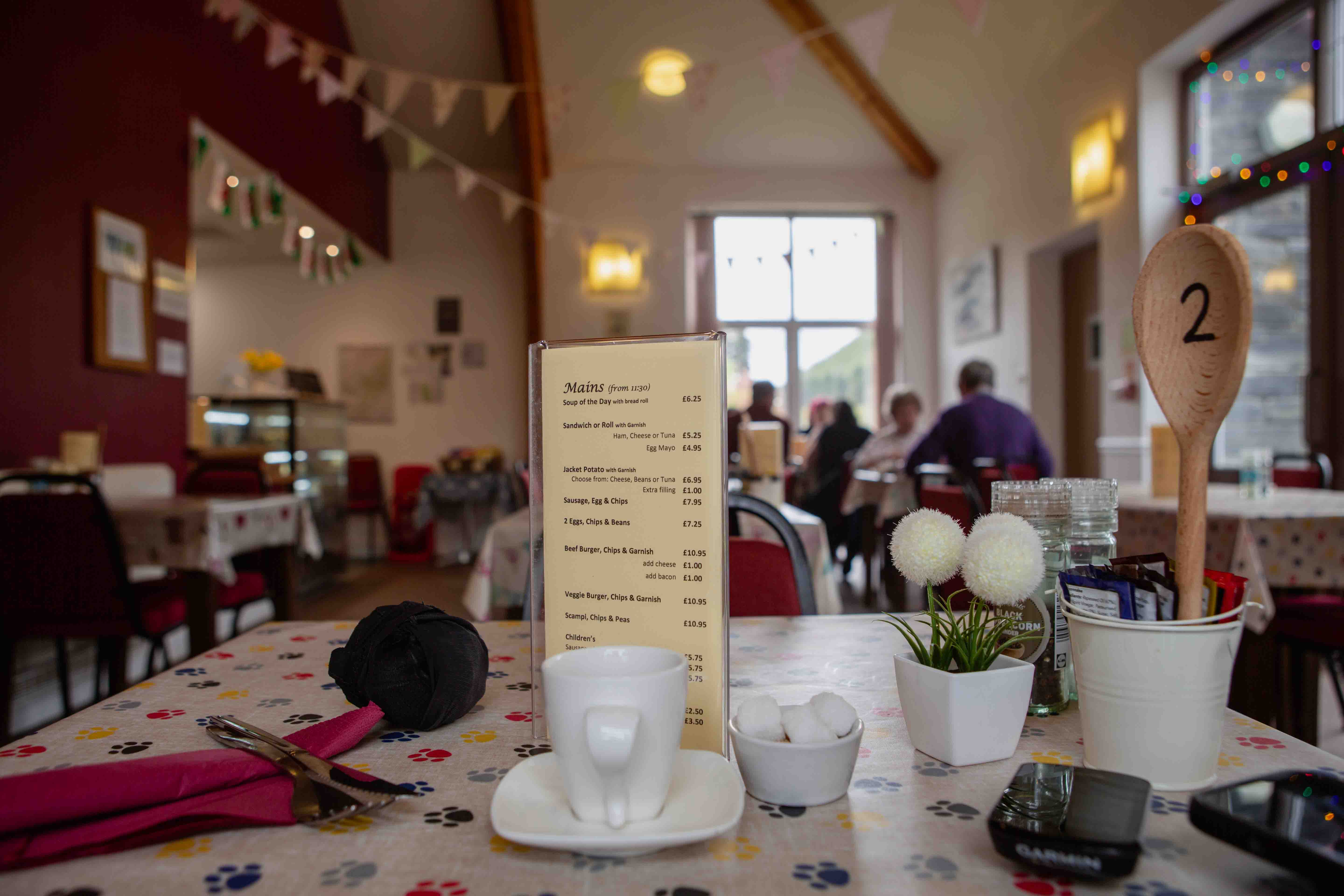
I popped into the village hall, where the cafe was the only sign of any life, and ordered sausage, egg and chips. Not exactly my usual lunch, but I felt like I’d stepped back in time so I might as well eat something old fashioned. Around me were families or old couples in for a tea, all only speaking Welsh. Deep in the valleys, I felt a long way from home.
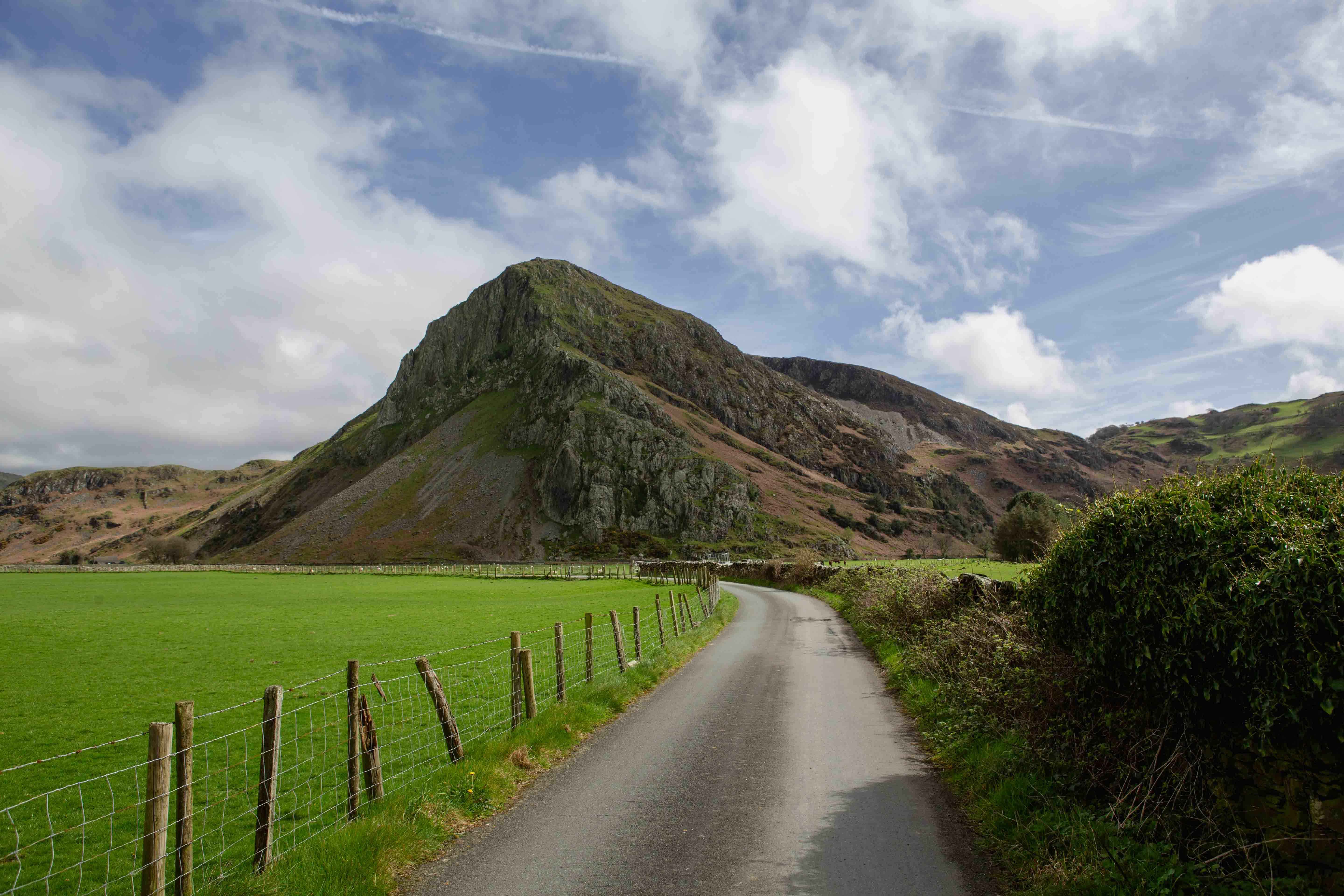
The sun poked out as I started the next climb, an easy ascent on more tarmac. It was undoubtedly one of my favourite sections of the route, but by the time I reached the top the weather had closed in. I could see Barmouth, the coastal town I’d cycled through on the Lon Las Cymru, but I didn’t pause long to enjoy the view, descending quickly to reach sea level and get out of the clouds. By the time I reached the bottom, I was soaked through and miserable.
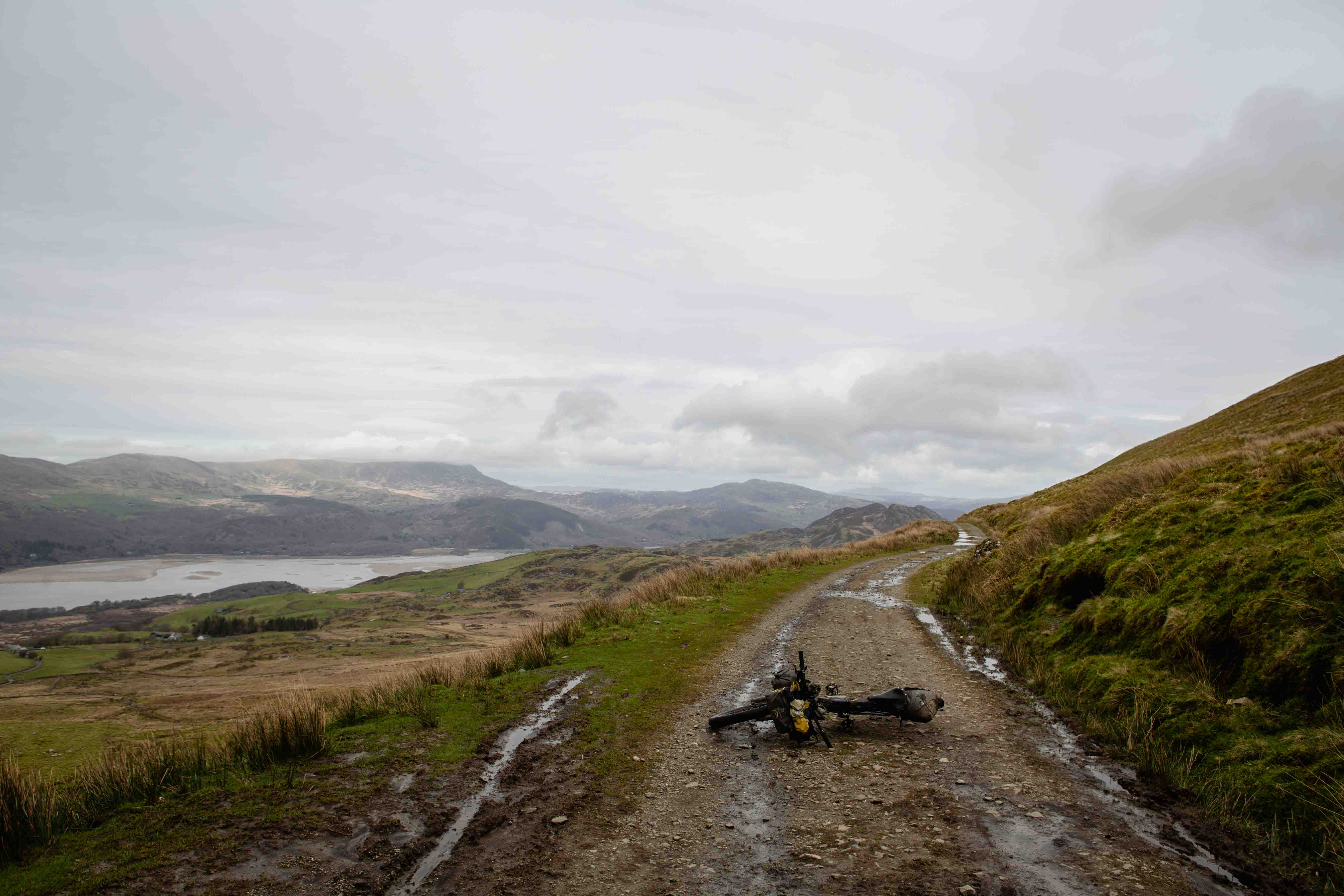
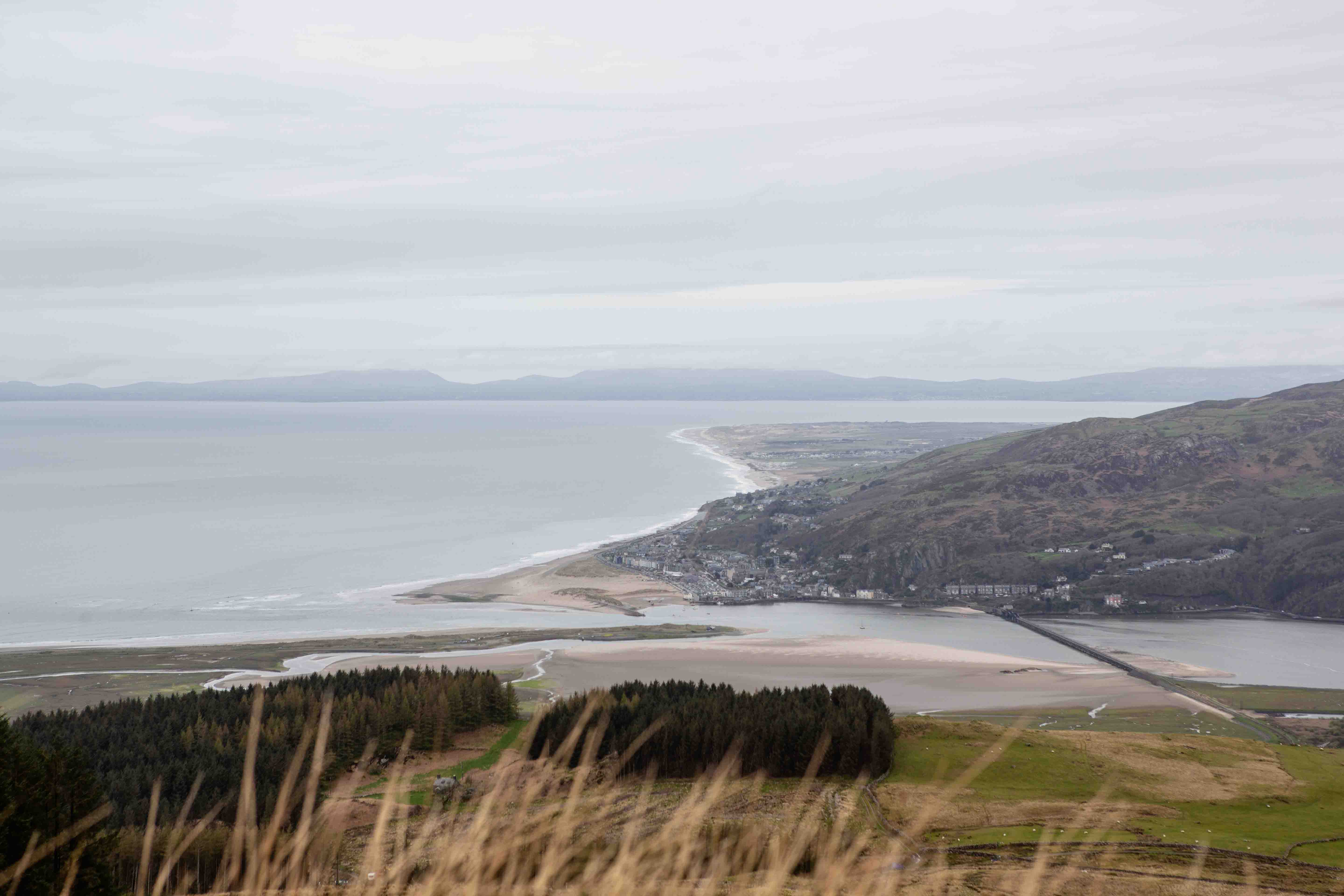
Having ridden through Barmouth a couple of years ago, I distinctly remembered riding along the Mawddach trail, and one of my most memorable campsites of the trip (see the photo below). Now I was riding the same stretch of trail, but under far less pleasant circumstances and certainly too much rain to take any photos.


Storm Kathleen had been name dropped every time I read the forecast, and it was finally closing in. I did not want to camp outside, but there were not many good alternatives along this stretch. A bunkhouse would have been an inconvenient detour, and I didn’t want to pay for a hotel. Besides, I hadn’t actually slept in my tent yet this trip – and would have felt a little silly carrying the added weight the entire way if I didn’t use it once.
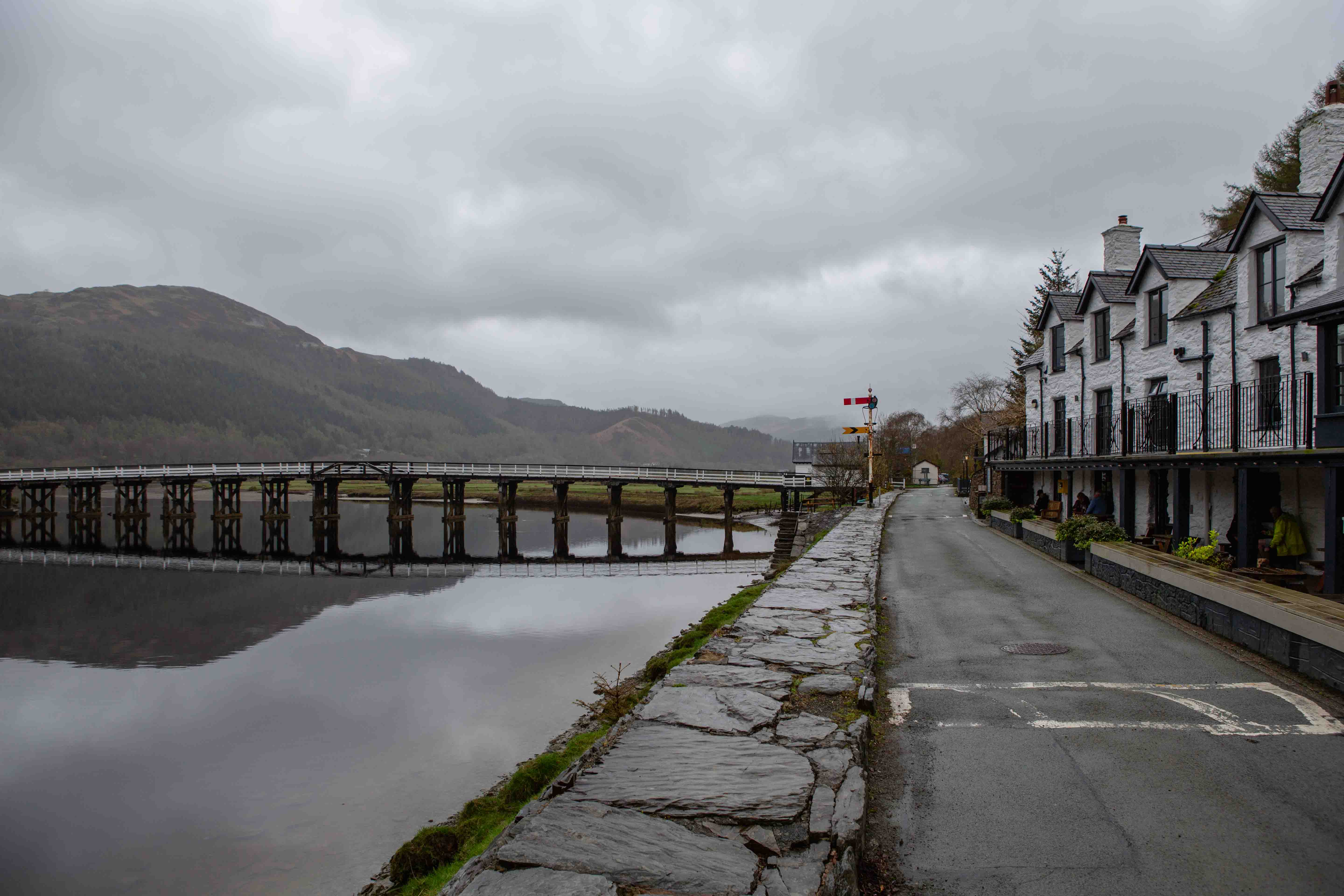
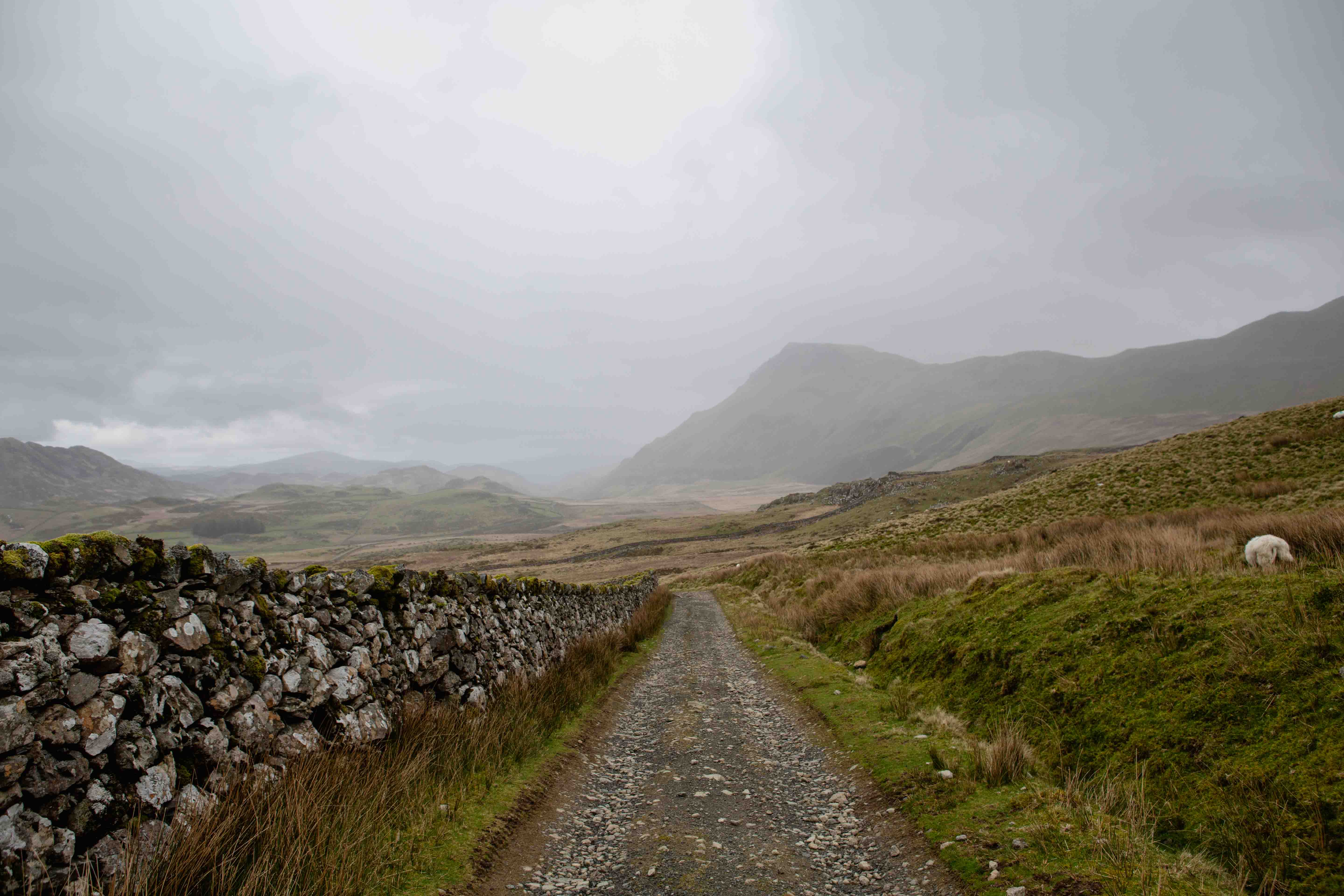
I decided that I’d ride up the next climb, into a remote area, and find somewhere to pitch up for the night. It was hard to find a suitable spot; The ground was like much of the high bog you find across British moors or the Highlands – all wet and squishy. It doesn’t look too bad at first glance, but as soon as you put any weight down the ground sinks into water. Putting a tent on that stuff is the worst. It seems OK (possibly even comfy) at first, and then you notice the water seeping in through your groundsheet and begin regretting the choice…


I liked the idea of waking up with a nice view, but cover seemed sensible with the incoming storm, so I tucked myself in amongst some trees on the side of the dirt road. It was highly unlikely I’d see anyone up here, particularly in this weather. Those forestry woods are not the most appealing, but they can be great for camping. They can grow on the hard ground by the road, they provide dense cover from rain, and are evenly spaced so you can usually fit a (small) tent in OK.
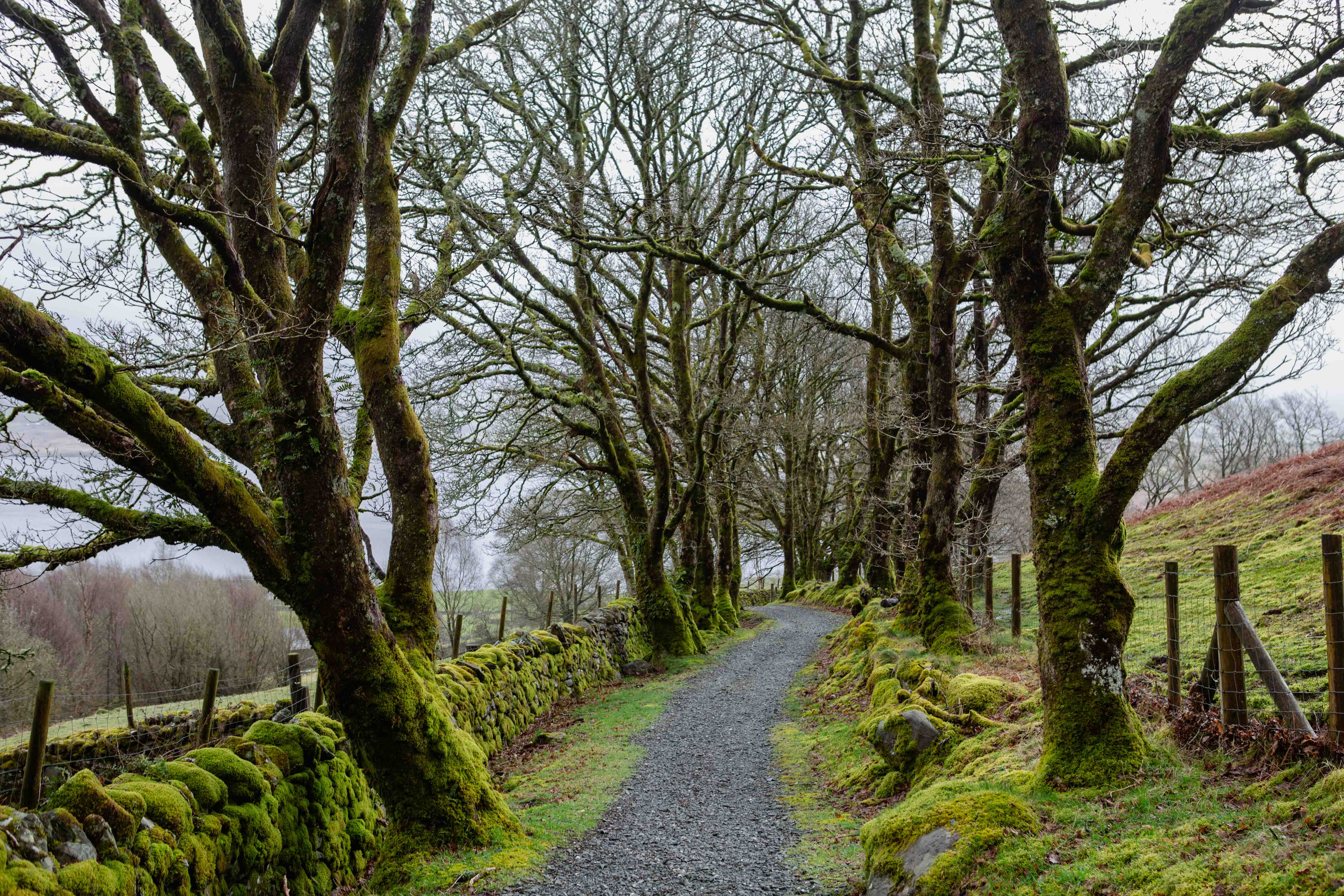
And boy was I glad for rain cover that night. It chucked it down non-stop for hours and the wind howled all night. It was quite something, a little unsettling even. It takes a lot of rain for my tent to pool up with water, but despite the tree cover I still had a couple of little ponds in the corner of my tent when I woke up.

The next day was one of the most unpleasant I’d had in quite some time on the bike. I passed through Coed y Brenin MTB park in the late morning, which was eerily quiet, and gave my bike a hose down. My gears shifted slightly better for half an hour, until everything was caked in mud again.
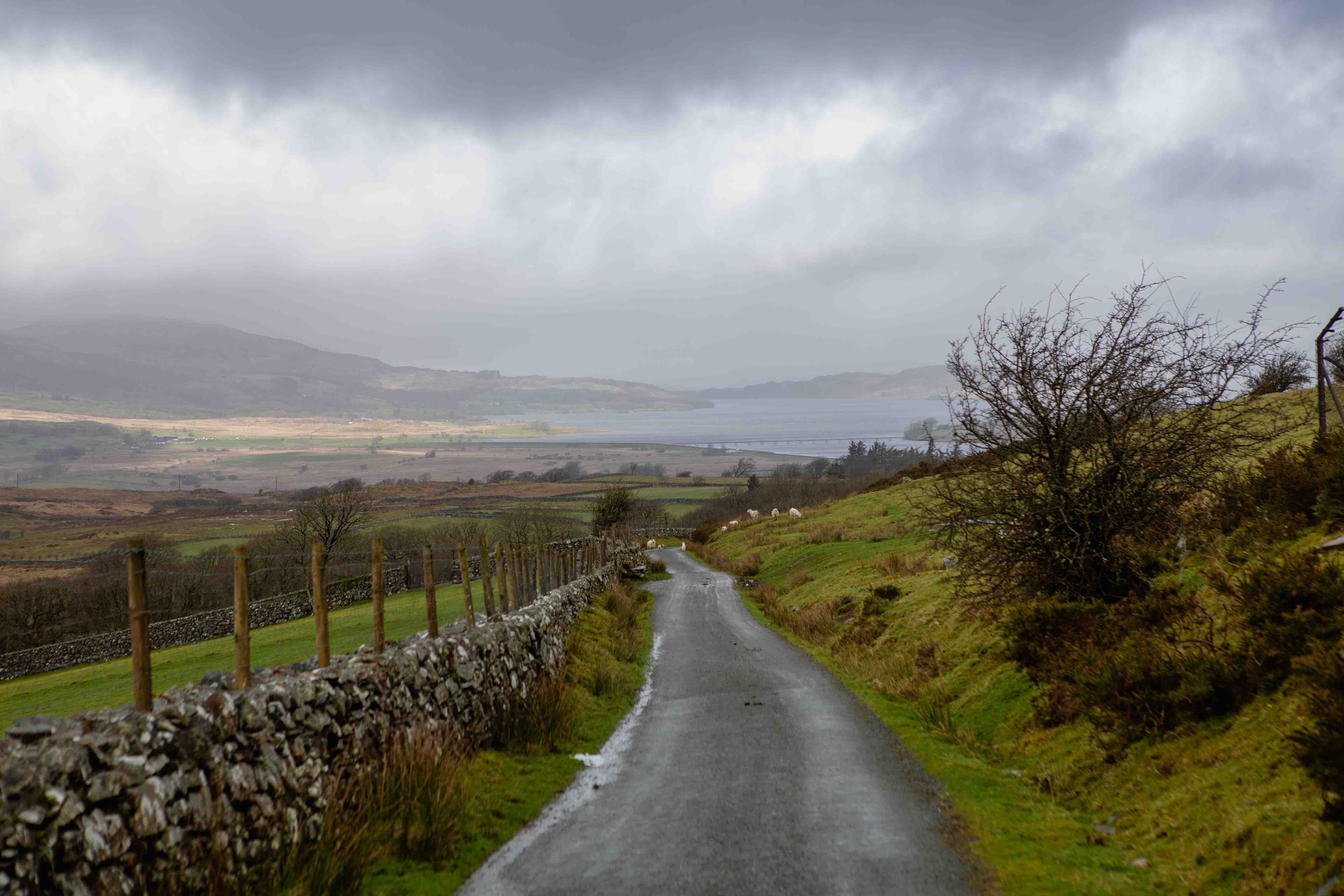
By the time I reached Trawsfynydd, after following the old Sarn Helen roman road, I was starting to shiver. I dived into the first bus stop I found in town to get out from the sideways rain. The weather was vile. After half an hour, the storm showed no sign of relenting so I decided to brave the elements in search of a warmer hideout. There didn’t seem to be much going on in this village, but perhaps there was a cafe up the road that I could warm up in.

To my dismay, it was closed when I arrived, so I dived into the next bus stop. I was in a real sulk when a van pulled up and a man jumped out. “You wanna come in for a coffee?” He pointed to the cafe. “Erm, yes” I replied without much hesitation, “but I thought you were closed?”
“Well, we are ” he replied, before looking me up and saying “but you’d better come in and warm up – it’s horrific out here”. And so, the door was unlocked, the coffee machine turned on, and I was invited to spread my clothes out on the radiators. I felt bad, creating puddles of water all over this closed cafe, but incredibly glad to be inside with a large cappuccino in my hands that was slowly warming my soul.
I got bored eventually – there’s nothing more tedious than waiting for rain to ease – so ventured out into the elements. It was a little better, but it still felt like I’d been sucked into a Welsh winter.

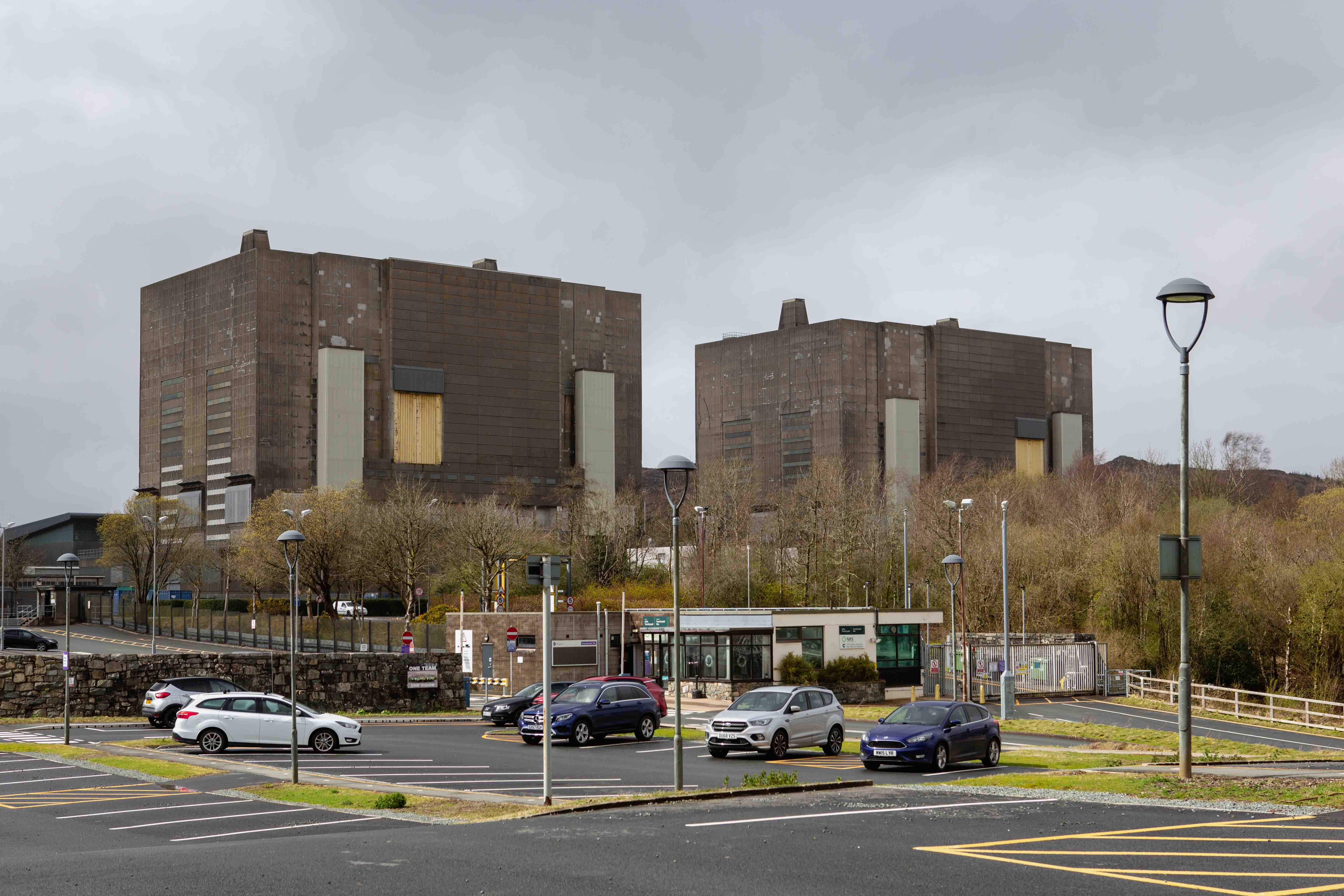
The lap around Llyn Trawsfynydd reservoir was really cool, with gravelly trails that were worth the detour even in the drizzle. On the other side of the water was Trawsfynydd nuclear power station – which, despite being in one of the UK’s most beautiful National Parks, was one of the most impressive sights of the trip. The plant became operational in 1965, decommissioned in 1991, and then twenty years later redeveloped using small-scale reactors.

I’d made the sensible choice of booking a dorm bed in Betws-y-coed while in the cafe hiding from the elements, which was a wise decision. The winds were reaching 50 mph, which was wild. But I also wasn’t complaining too much – they were blasting right behind me.

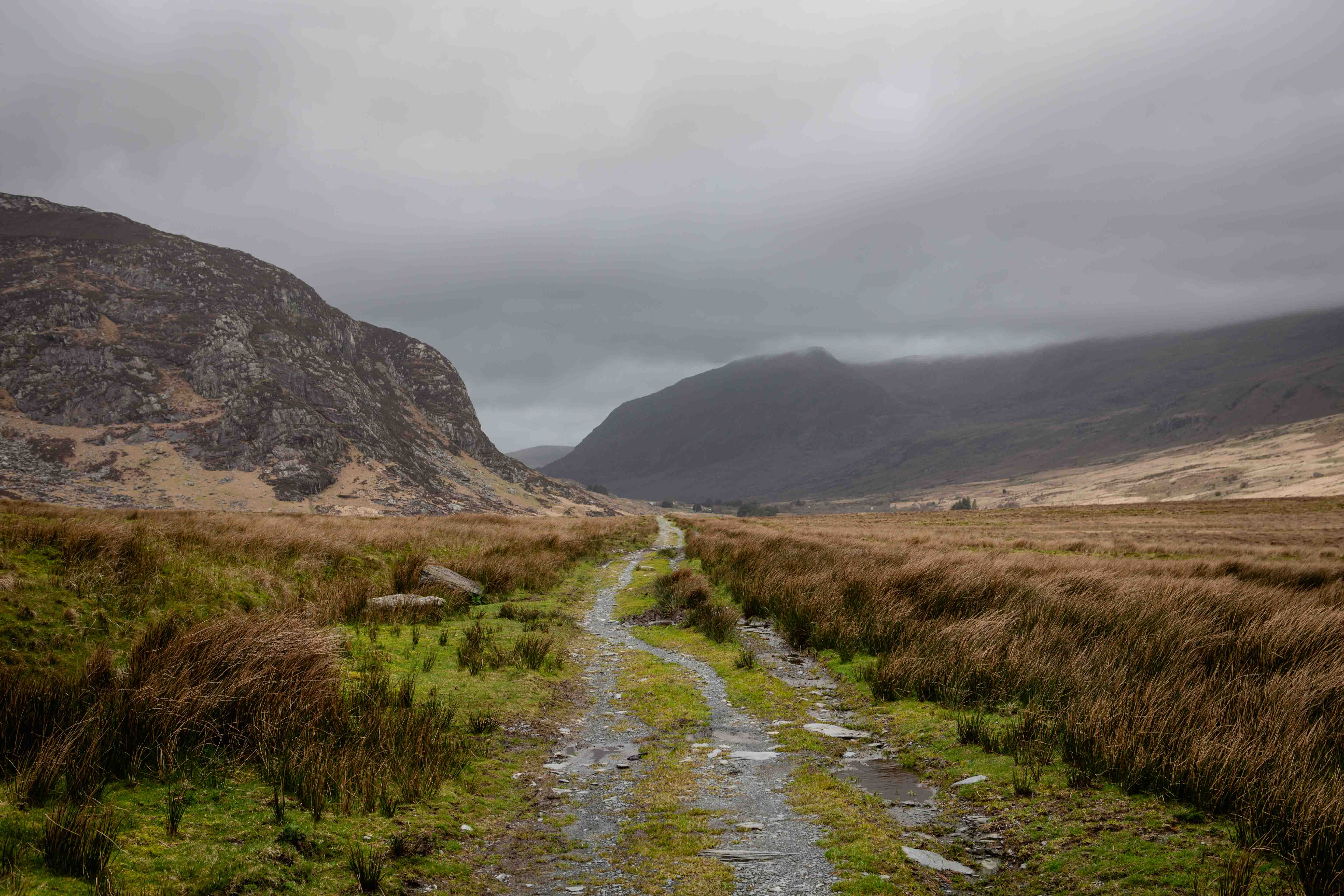
There were still some tedious, boggy stretches, pushing across muddy fields, but far fewer of these slow sections than on the TCW. These were still arduous, even with the kind tailwind, but on the tarmac road up across the moors I was flying faster than I’ve ever ridden on my MTB. Getting down was almost scary and I could smell my disc brakes burning on the descent.
The Traws Eryri wriggles on its way to Betws-y-coed, adding on a good 20km and a few hundred metres of climbing, but I decided against the shortcut now that the rain had finally stopped. It was a big day by the time I reached town, after 80km and I was more than ready to treat myself to a pizza, beer and a night under a duvet.
Betws-y-coed is a funny place. It was the most touristy of anywhere I visited on this cycle, but perhaps that makes sense given its position as a gateway to Snowdonia and the highest peak in Wales. It feels almost Alpine, with fancy hotels with heated patios, and tourists out wielding selfie-sticks by the waterfall that passes through town. They even had a fancy farmers market on, so I picked up a scotch egg the size of my head and an ‘oggie’ pastry.
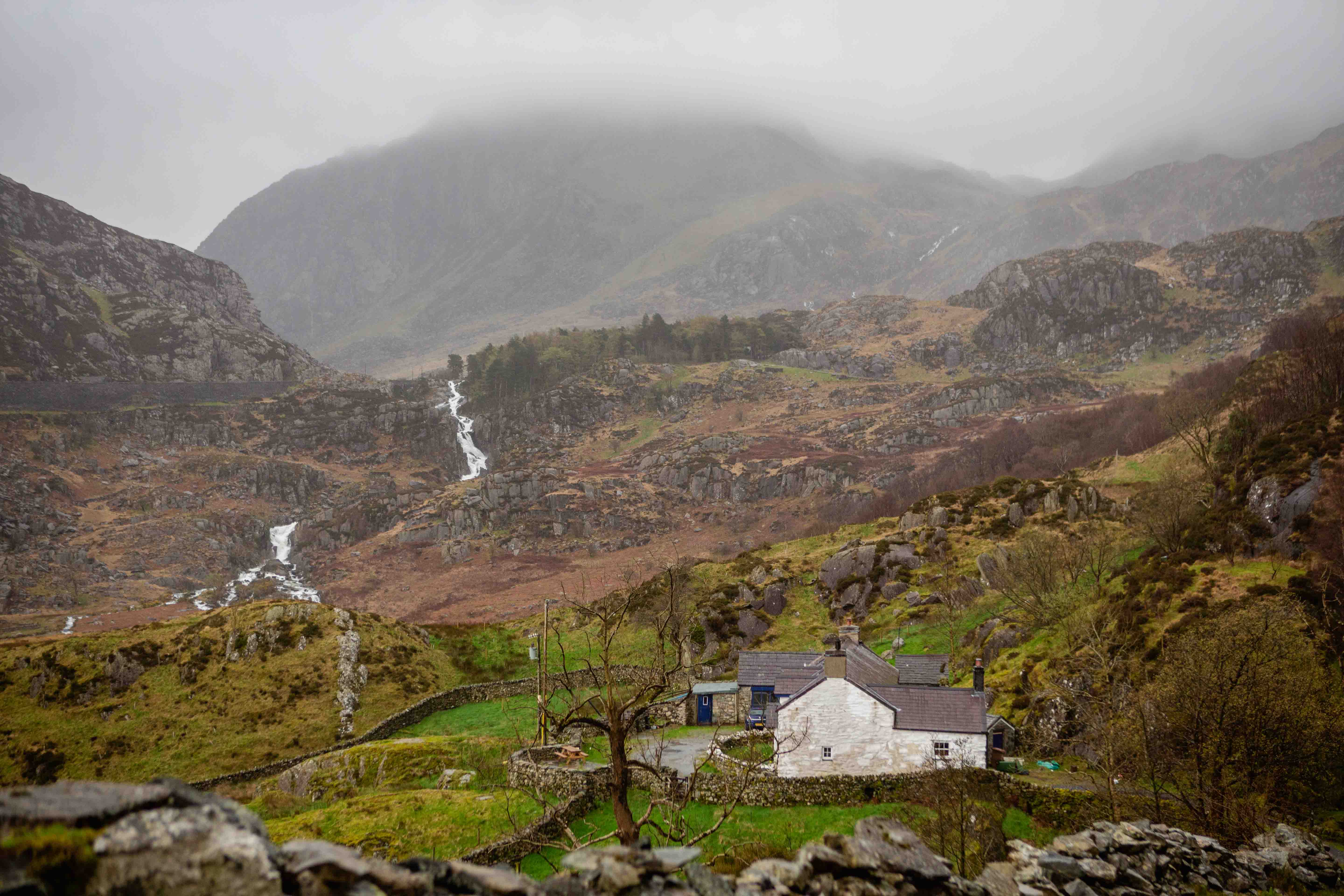
It was my final day of riding to Llanberis, and I was pleased that it was a short one. It was another tedious day of hiding for cover whenever the rain rolled through. But, it did include one of my favourite sections of the trip, following the Roman road that runs parallel to the A5 up to the high point around Pont Pen-y-benglog.

Once again I found myself sheltering in a bus stop at the top, wondering what I’d done to deserve so much rain. I passed the time chatting to a hiker who’d sacked off all his plans after getting soaked through. He reckoned it was far too dangerous to be up high in winds like this.
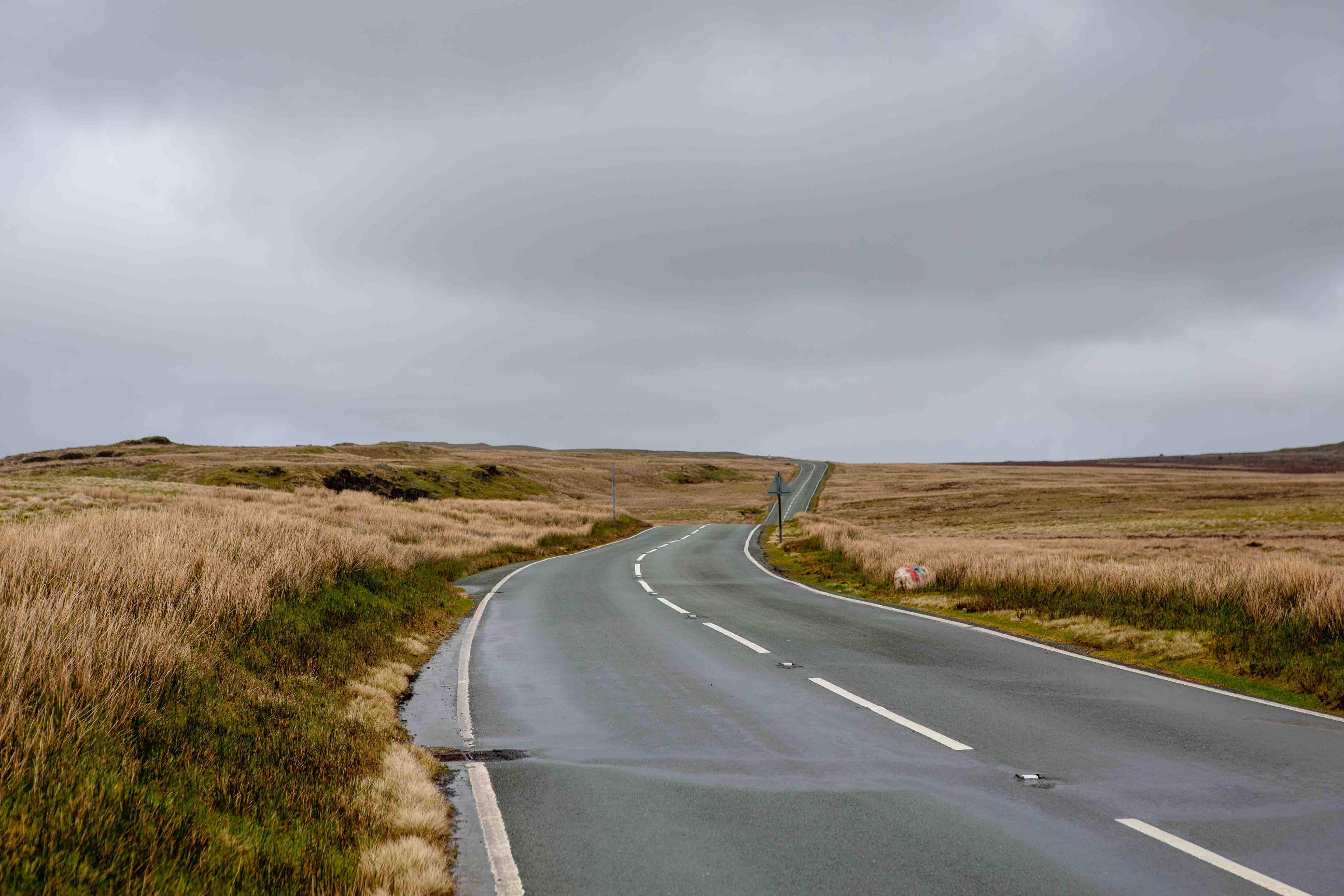
From Bethesda, after an almighty descent, I said goodbye to the Traws Eryri route and headed up and over the next hill towards Llanberis town. It had been a beautiful ride, but I was certainly glad to be stopping. I was especially glad to be visiting an old friend, Harry, who lives in Llanberis.
Harry and I worked together in London a few years ago. In a shitty turn of circumstances right bang in the middle of the pandemic he found himself out of work and living at home. He re-trained, found a new career and now works remotely in one of the most beautiful parts of the UK with mountains right on his doorstep. He has all my respect. And a little of my jealousy, too.

I was so excited for a hot shower after a final day of dragging myself across wet Welsh hills, so was quietly rather disappointed to find out that Harry’s boiler had broken. But the hospitality was warm, and Harry and his partner had family and friends visiting, so I did my best to swap my outfit for something slightly more dry and civilised (without much success) for my taste of Welsh village life in Snowdonia.
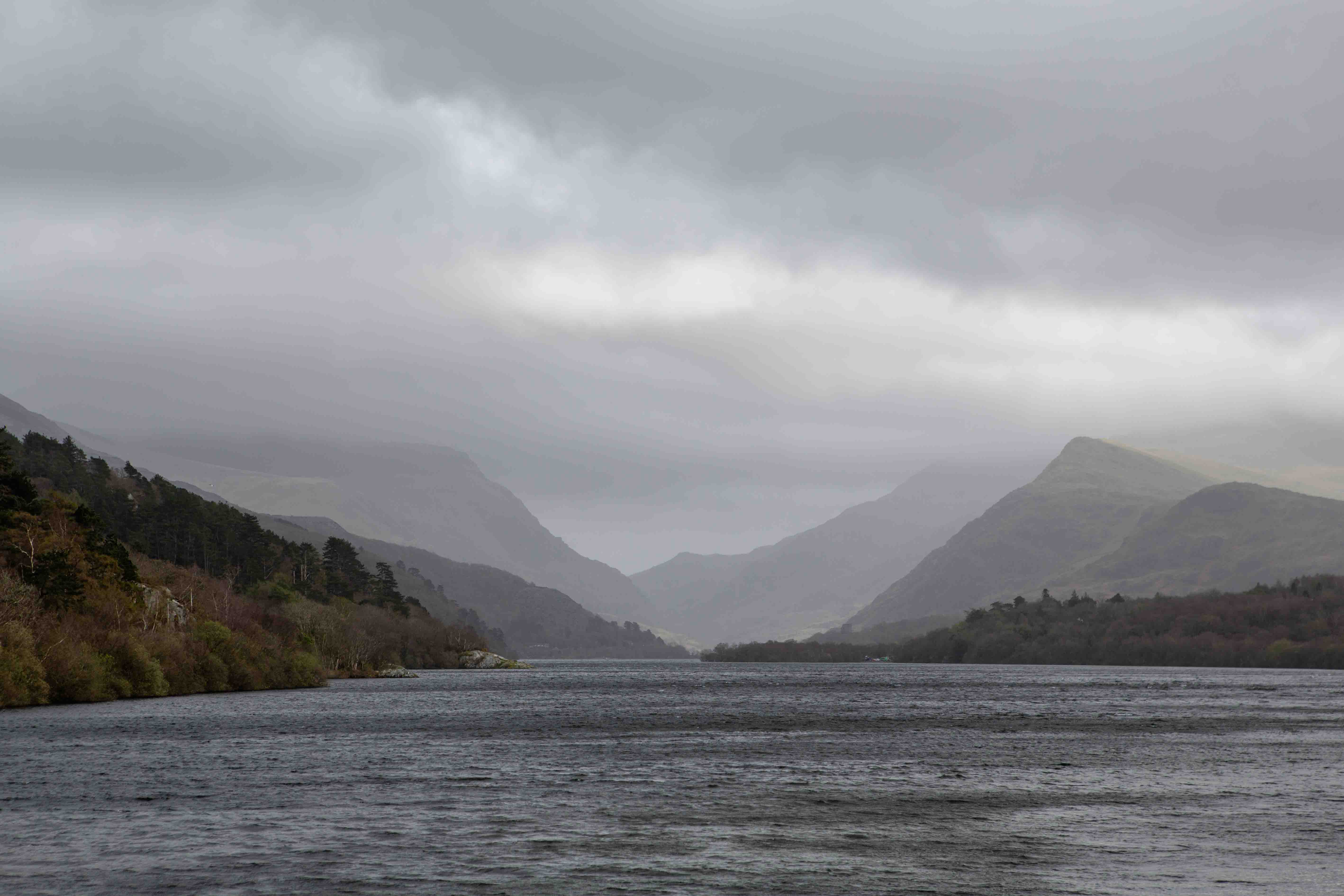
Llanberis is a charming place, perched on a lake with mountains around. In a strange way, it reminded me of Annecy, where I stopped last year visiting another of our former colleagues.They’re both communities full of wholesome outdoor-enthusiasts, who live a lifestyle I find quite inspiring when I compare it to the Londoners I surround myself with day-to-day. And yet, on the other hand, they couldn’t really be any more different. The lake at Llanberis did not look appetising for a dip at all, and the skies were most definitely not blue. I’m not sure they often are…

The following day Harry dropped me at Bangor train station, saving me a short cycle, and I hopped on the train(s) back to London. If that was my last UK-epic for a while, and my last discounted young-persons’ railcard journey, I was happy to have gone out in style. What am I now? A middle-aged person? At least I’m not bored of cycling yet.
PS. You can find my full route on komoot here.
 JKB's Bike Ride