I have always limited this blog to bikepacking trips (or sections of much longer overland bike tours), that consist of at least a few days. I’ve cycled many ‘weekenders’ and ‘overnighters’ over the last few years that have been wonderful adventures, but I’ve never included them here because I’ve tried to keep this site limited to the longer trips. That is, after all, how this blog started: documenting my round-the-world cycle nearly 10 years ago.
But I’ll make an exception on this occasion and include the 2-day, 100 mile loop that I pedalled out from Granada in Spain this summer. Why? Because it was a particularly epic weekend, and because it included an ascent of (and subsequently almighty descent from) Europe’s highest road.

I found myself in Granada for work, attending the bikepacking race Badlands. I’d been considering heading to Spain a little earlier than needed (I was still technically homeless, so why not), and when I discovered that Stage 9 of this year’s La Vuelta would be finishing in Granada on the 25th August, it seemed like it would be a missed opportunity not to catch that.
Seeing La Vuleta would be a bonus, but the real reason I wanted to head out a few days early was to tackle a climb I’d been dreaming about for years: Pico Veleta. The second-highest peak in Sierra Nevada National Park and Europe’s highest road.
I’ve been following Badlands since its inception in 2020. When I previously worked at Apidura, we supported the race from its inaugural edition. It quickly grew to become one of the pinnacle bikepacking races of the calendar, drawing participants from around the world due to a highly competitive roster and some truly stunning landscapes. The regions that the Badlands route passes through really look out-of-this world to me. When I first saw the race, I had no idea such landscapes existed in Europe.
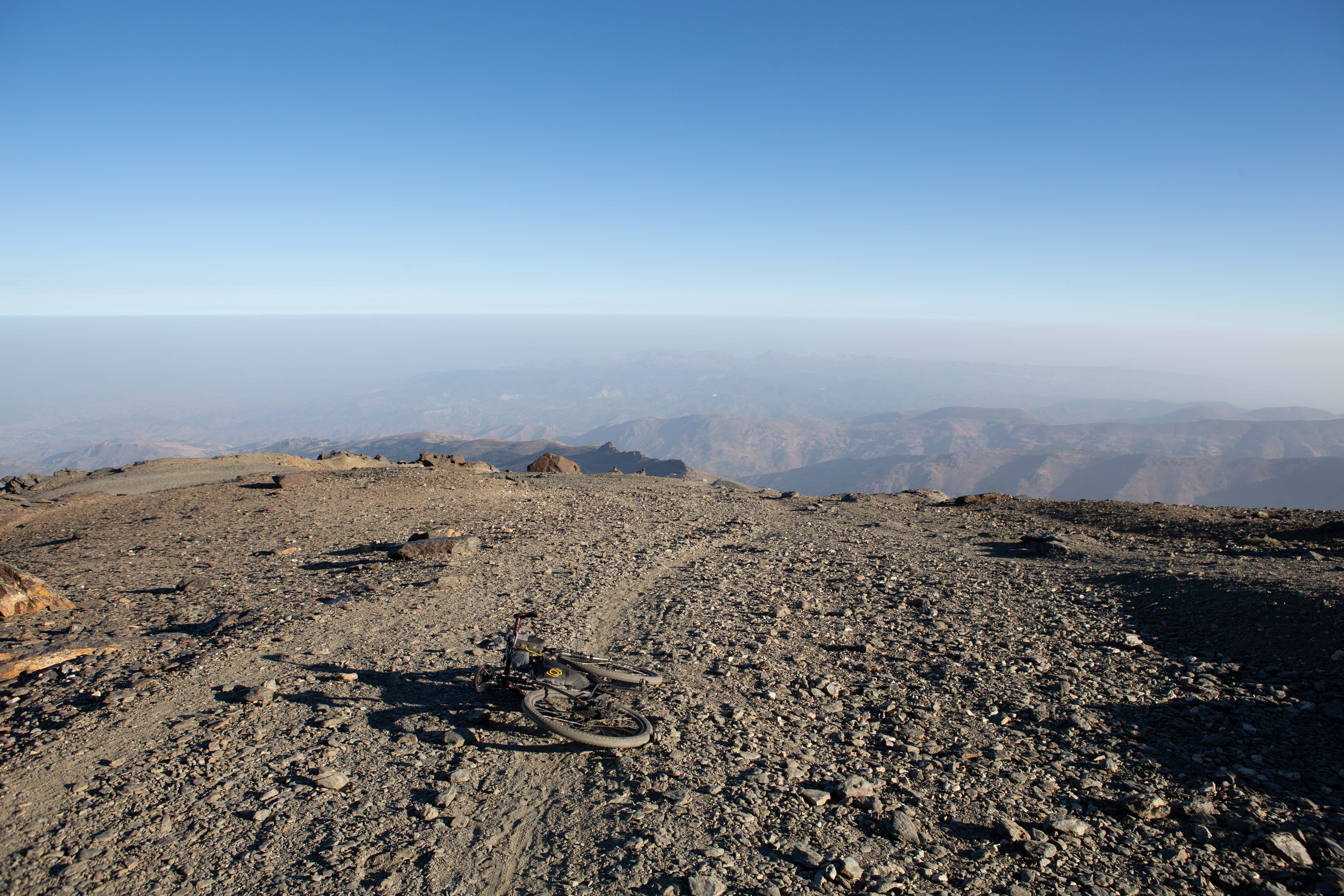
In the first edition of the race, the route included Pico Veleta. It hasn’t featured in the route since, but is still ‘suggested’ as an optional add-on to finishers who still have the legs to ride back to Granada from the finish in Capileira (on the other side of the mountains). Earlier this year, I worked with the organisers on launching Badlands Unplugged: a touring route for those who want to explore the landscapes by bike at their own pace, outside of a race setting. That route also includes Pico Veleta as an optional segment to complete the loop to Granada. It’s an optional addition because it climbs to such heights that it is only accessible over summer, it’s a protected area, and because it can be less safe due to the high elevation.
Since that first edition of Badlands, and seeing the photos of riders head over Pico Veleta, I’ve been dreaming about cycling that road. I’d be lying if I said its status as ‘Europe highest cycling col’ wasn’t part of the appeal, but the main draw was the breathtaking views I’d seen from the summit.

When I checked the route for the stage of La Vuelta, I realised that it would be possible to catch the peloton on my way up, combining both an afternoon of pro race-watching with the long climb up to Pico Veleta. I was pretty excited about watching the race. While I don’t often follow professional races, over the last couple of years I’ve developed a deeper interest in the Tour de France (thanks in part to the Unchained Netflix documentary), which has made me more keen to watch a road race in person. Given my line of work, I’m almost slightly embarrassed to say that I’ve never seen a professional bicycle race in real life, so now was a nice opportunity to correct that.
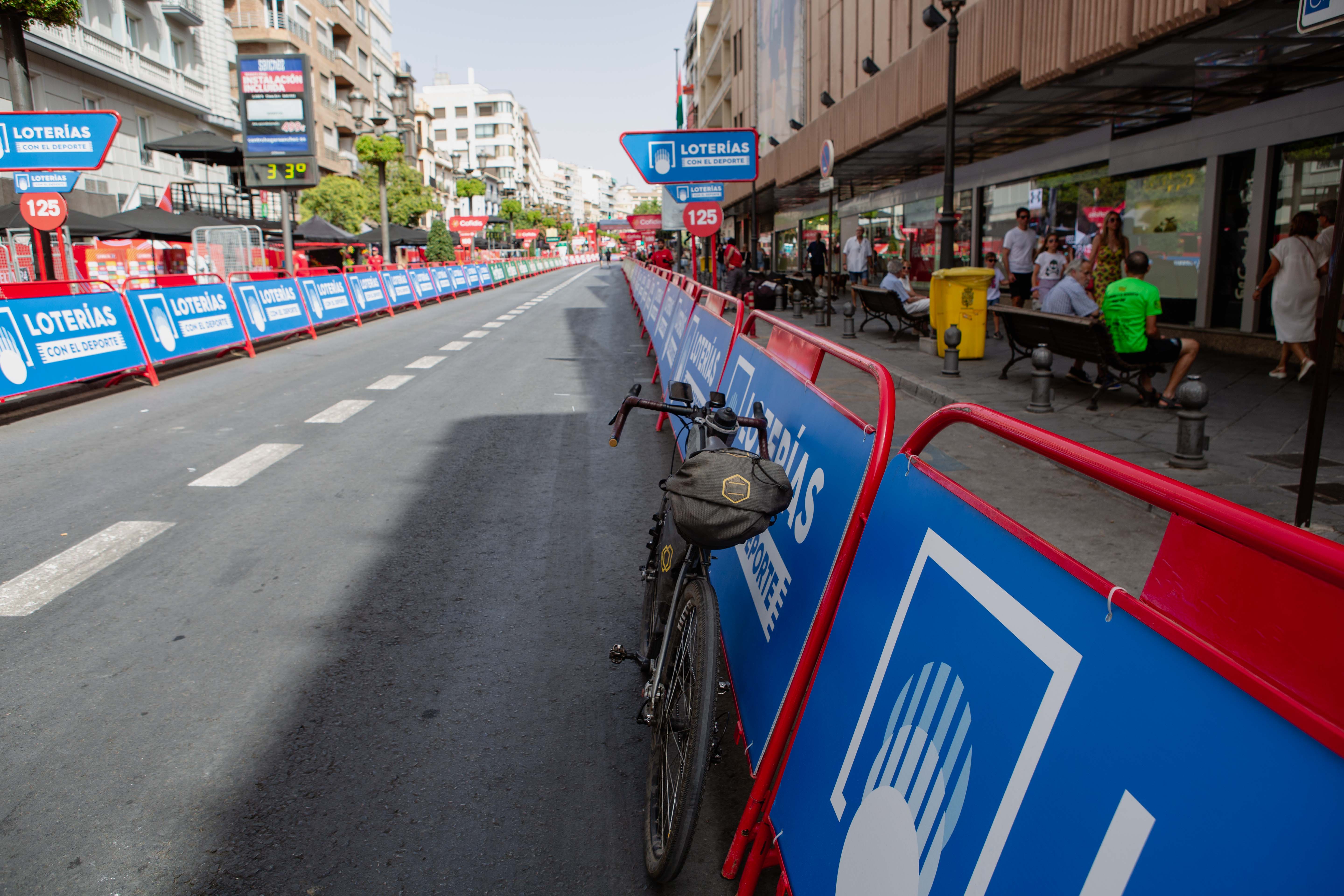
The heat was really quite stifling leaving Granada in the morning. I had a slow morning, having arrived late the previous evening, and by the time I finally got moving the temperature was around 37C. I was already daunted by the Pico Veleta elevation profile at 3,398 m but the heat made me additionally nervous about the day ahead.
I manoeuvred the build up to the Vuelta stage finale in the centre of town, before heading towards Mochil and the start of the climb. This was the route that the peloton would be taking, so I could ride up before they did.
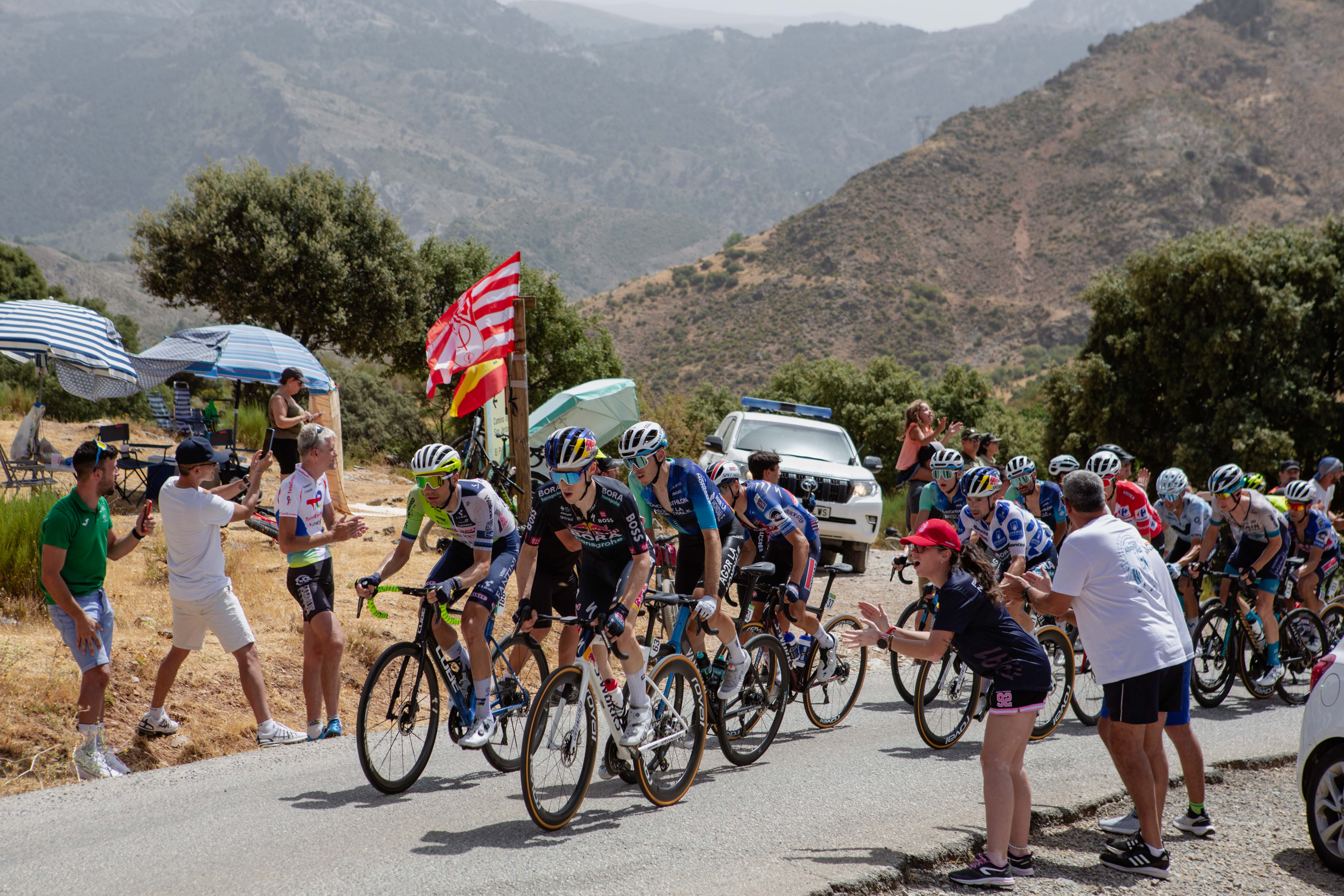
La Vuelta is one of the 3 Grand Tours in cycling. The Tour de France being the most famous, and then the Giro d’Italia. In La Vuleta there are 21 stages, covering an awful lot of Spain.
I wasn’t entirely sure what to expect. Would it be easy to be in the right place at the right time? What was the right place? What would the right time be? Could I cycle up the road before them? Would it be really busy with spectators?
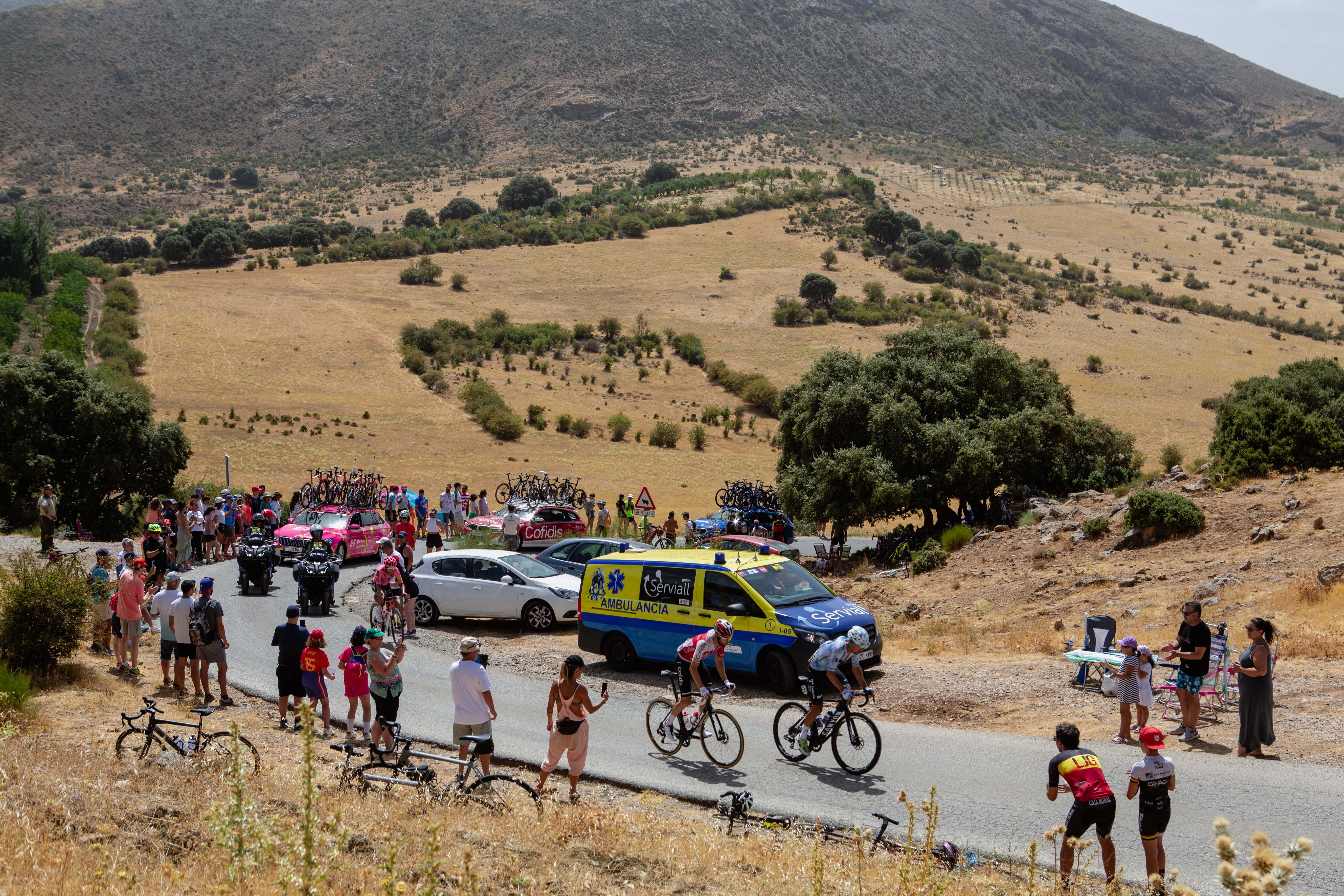
I needn’t have worried. The road was largely free from cars, and only a handful of spectators were already finding shaded spots to set up camp. There was a building sense of excitement, as more leisure cyclists joined me on the climb and official event vehicles overtook me.
The heat was more of a worry. I’d forgotten to fill my bottles at the start of the climb, and I’d already drunk far more than I’d expected to. The sun was beating down relentlessly, sapping the motivation from within me.

As I neared the top of the stage’s first climb, there were many more spectators. I just had time to eat a big plate of potatoes and bacon, before finding a good spot to catch the front runners. It was a little surreal to be riding up the climb as more and more race vehicles and motorbikes came whizzing past, each time going a little faster, suggesting that the riders were hot on their heels.
Unsurprisingly, the professionals flew up the climb at a speed that hurt my brain. At least I could take some solace in that they all looked like they were sorely struggling in the heat, pouring water over their heads, soaking their zipped-open jerseys.

After the climb, they turned left to descend, but if I turned right and continued up on my climb, I’d catch them on their next ascent. Once the last riders had passed, I followed them uphill, turning onto the main road which was closed to traffic. Fortunately I was waved through, and began slowly making my way up towards where I’d next catch them.
Soon the race vehicles began coming towards me with more speed, seemingly unimpressed by the fact that I was cycling up the closed road (against the traffic), even though I was slightly off the road. After getting beeped a couple of times, I accepted that I wouldn’t make it to the top, and began walking, nervously wondering when they’d come flying down past me.
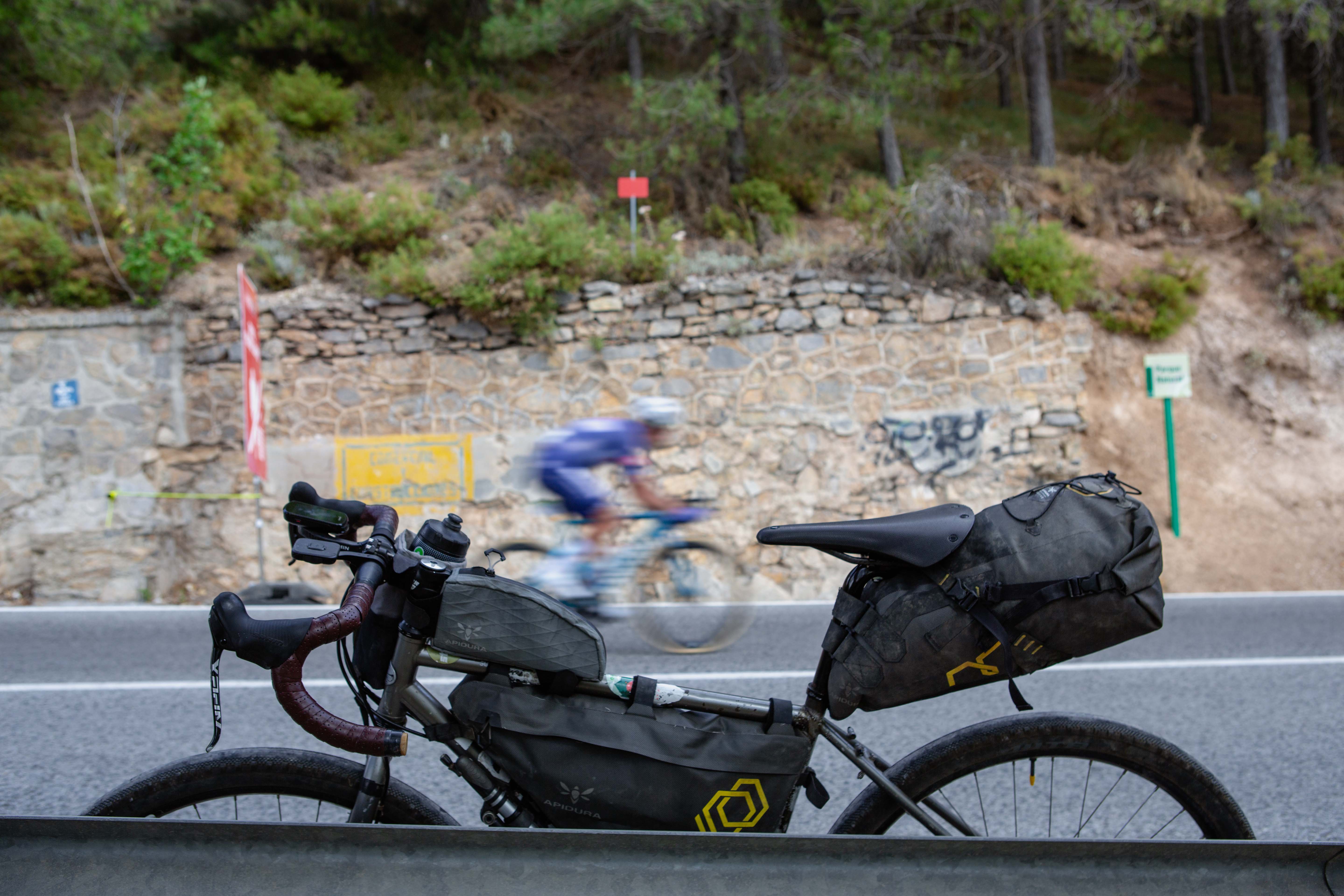
This time they were gone past me in the blink of an eye, descending at speeds I’d find quite terrifying. Once again, I waited for them all to pass before continuing upwards. The stage included a loop, so soon they’d be tackling the climb for a second time before continuing towards the finish line in Granada. This climb was much more lively, a chaotic assortment of spectators perched into too tight a space, with marshalls blaring whistles trying their best to keep everyone contained.
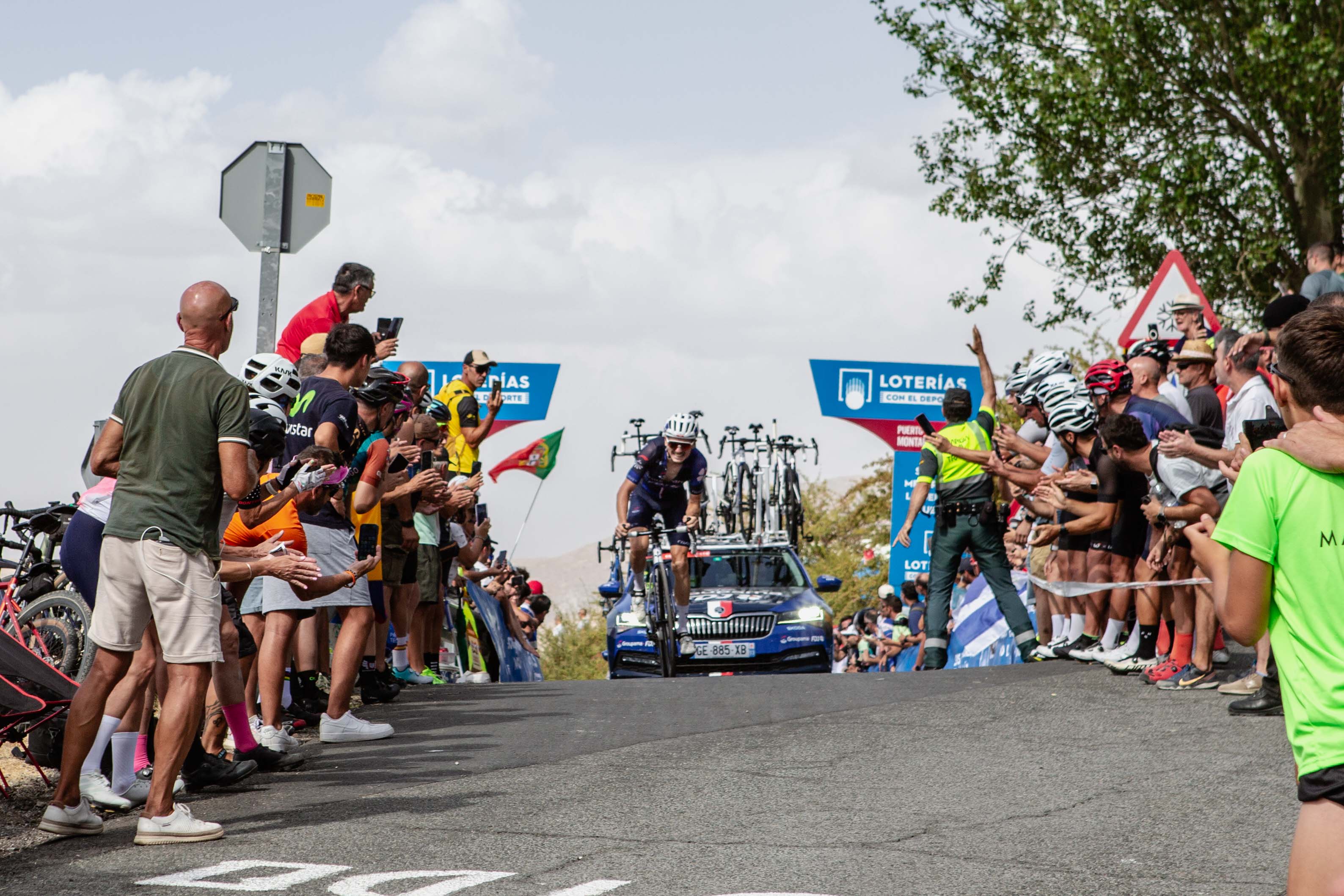
Once again, I continued pushing uphill, my next target Pradollano. The road had been closed for the race, so now I cycled past a long line of cars that were waiting for the road to safely reopen. I felt sorry for the ones in the front, especially if they hadn’t known the road would be closed. They might have been stuck there for hours, with no alternative route down the mountain…
At least the temperature was cooling as I gained elevation. At the top of the peloton’s stage high point, I still had two thirds of my climb remaining, and now the sun was starting to hang a little lower in the sky.


I made a pit stop in Pradollano, a ski town which felt bizarrely alpine considering the location and heat, before meandering further uphill beneath the ski lift towards Hoya de la Mora. From there, the road is closed to cars (not that there was any other traffic up there), towards the summit. I’d run out of daylight, and after a dazzling display of sunset reds and orange, darkness descended. I flicked on my front light, and pushed on for the last few eerie miles.

I had considered rolling out my bivvy bag, but instead carried on until Refugio de la Carihuela. I arrived at about 10.30pm and pushed open the door with my fingers crossed in the hope that it would be empty, only to find numerous sleeping bag silhouettes lit up as I shone my torch inside. I ended up simply rolling out my floor mat on the stone floor, with my bike next to me, trying my best not to disturb anyone.
It was a bad night’s sleep; my body and mind needed time to recalibrate for sleep after such a long day of climbing, and once I finally started to drift off the cacophony of snoring and sleeping bag rustling woke me up at what felt like every 5 minutes.
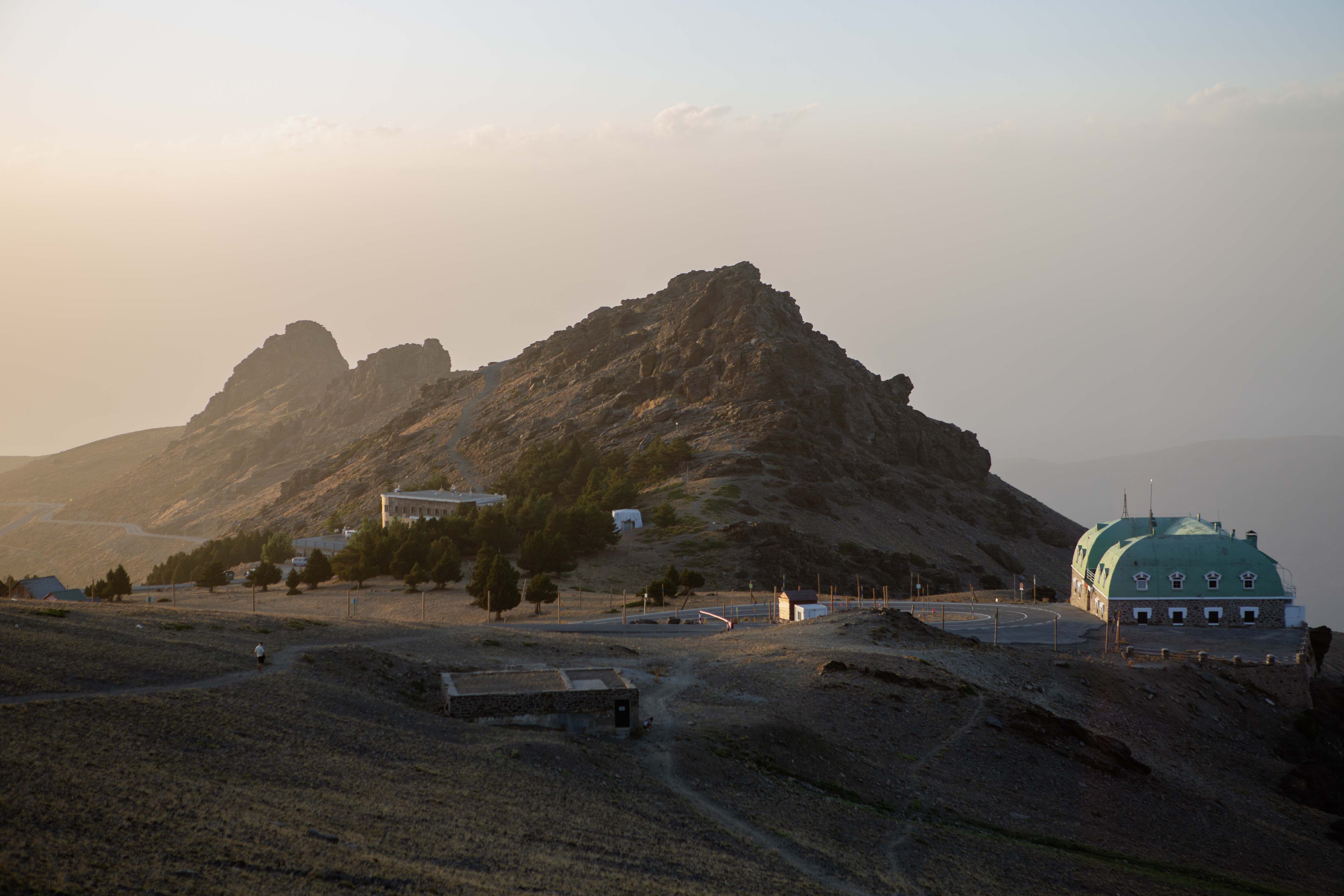
While I don’t love cycling in the dark, there is something quite special about waking up somewhere beautiful and first taking stock of your surroundings in the morning light. Everywhere looks more beautiful at dawn, especially when you’re at 3,200m with nothing but mountains around you.
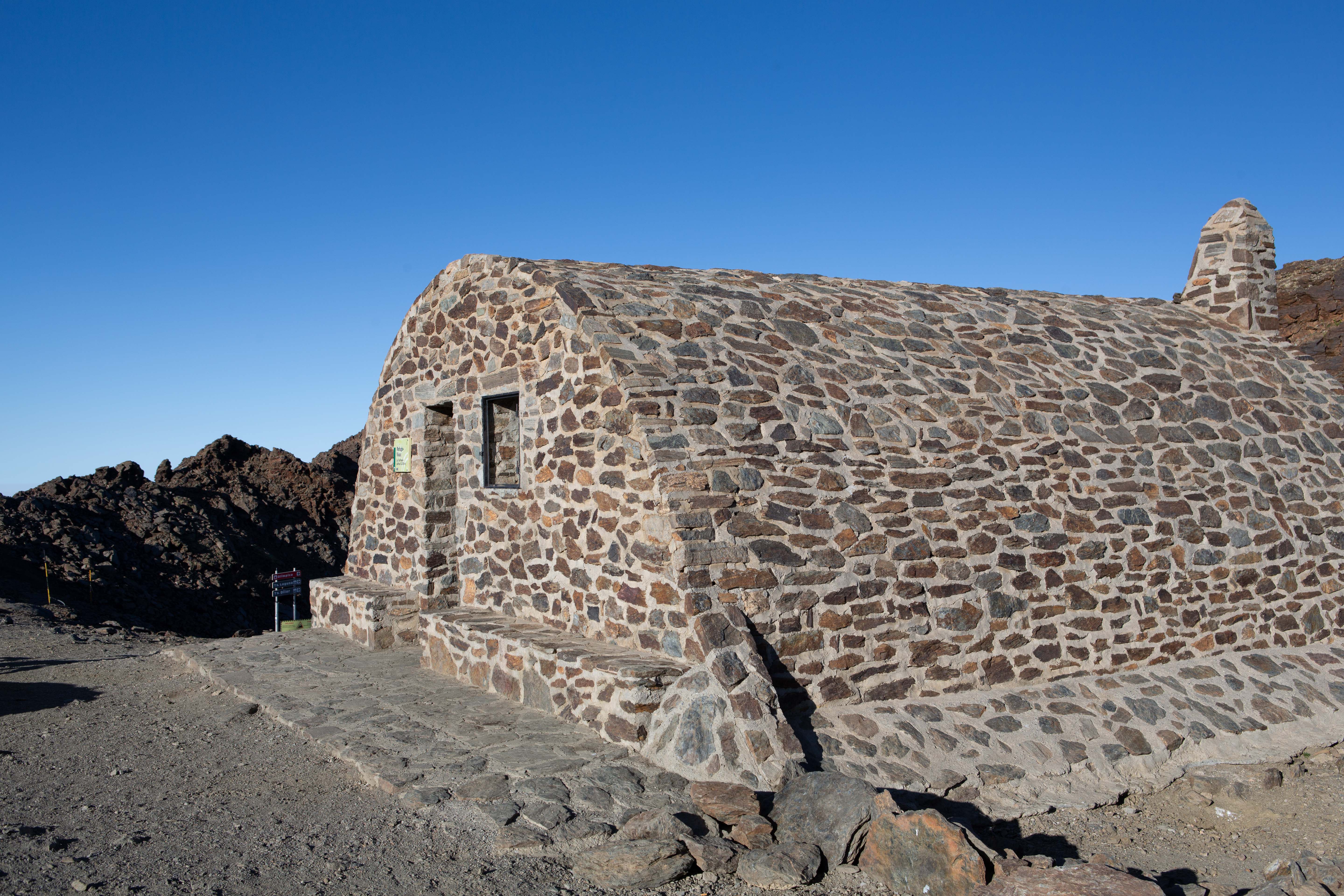

I left my sleeping stuff in the refuge, and rode the last couple miles up to the summit with a little less weight. The sun was slowly rising, lighting up the surrounding peaks, gradually shifting the hue from brown to orange and then blue.

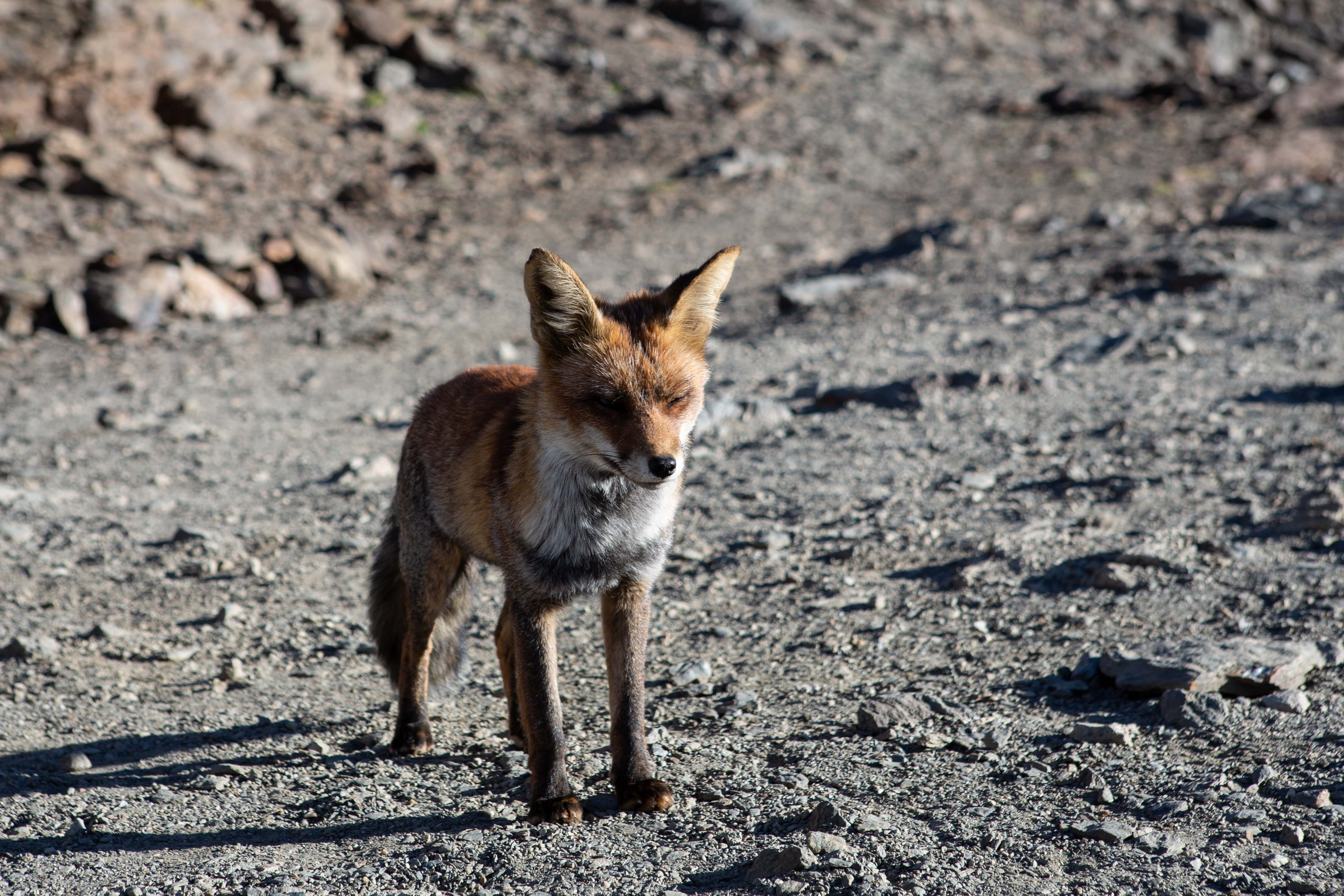
The ascent I’d followed was entirely paved until near the top. The descent, on the other side, was a very different story. Doable on my Dawes, but absolutely not a smooth ride. It was a slow descent, but that was fine by me – I wanted to stop and soak in the view at every turn anyway.
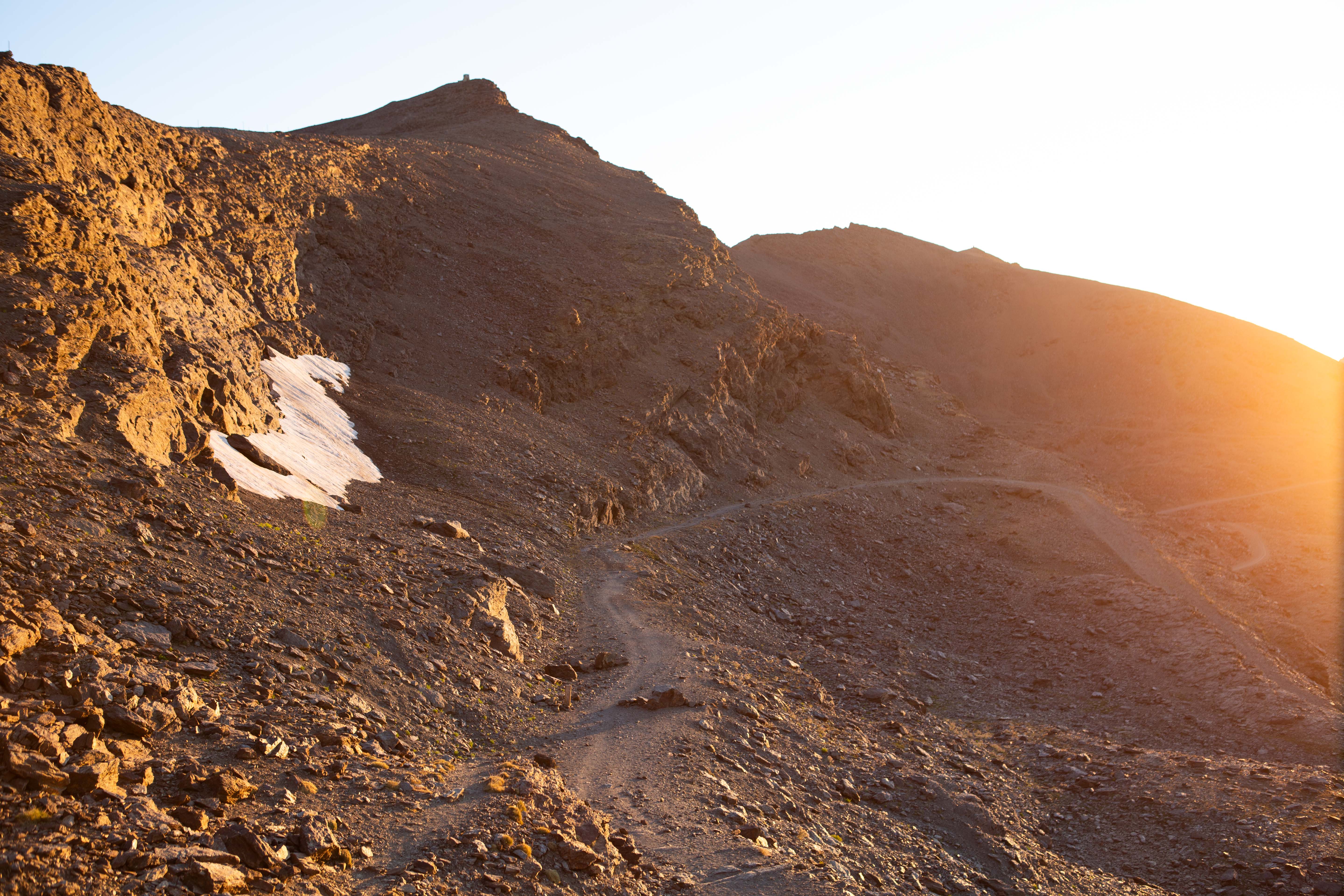
The landscape, barren and remote, somehow reminded me of stretches I cycled in Morocco’s Anti-Atlas a couple of years ago – and that was some of the best riding I’ve ever had. As I descended quite literally through the clouds, I was really on cloud 9 (excuse the pun).
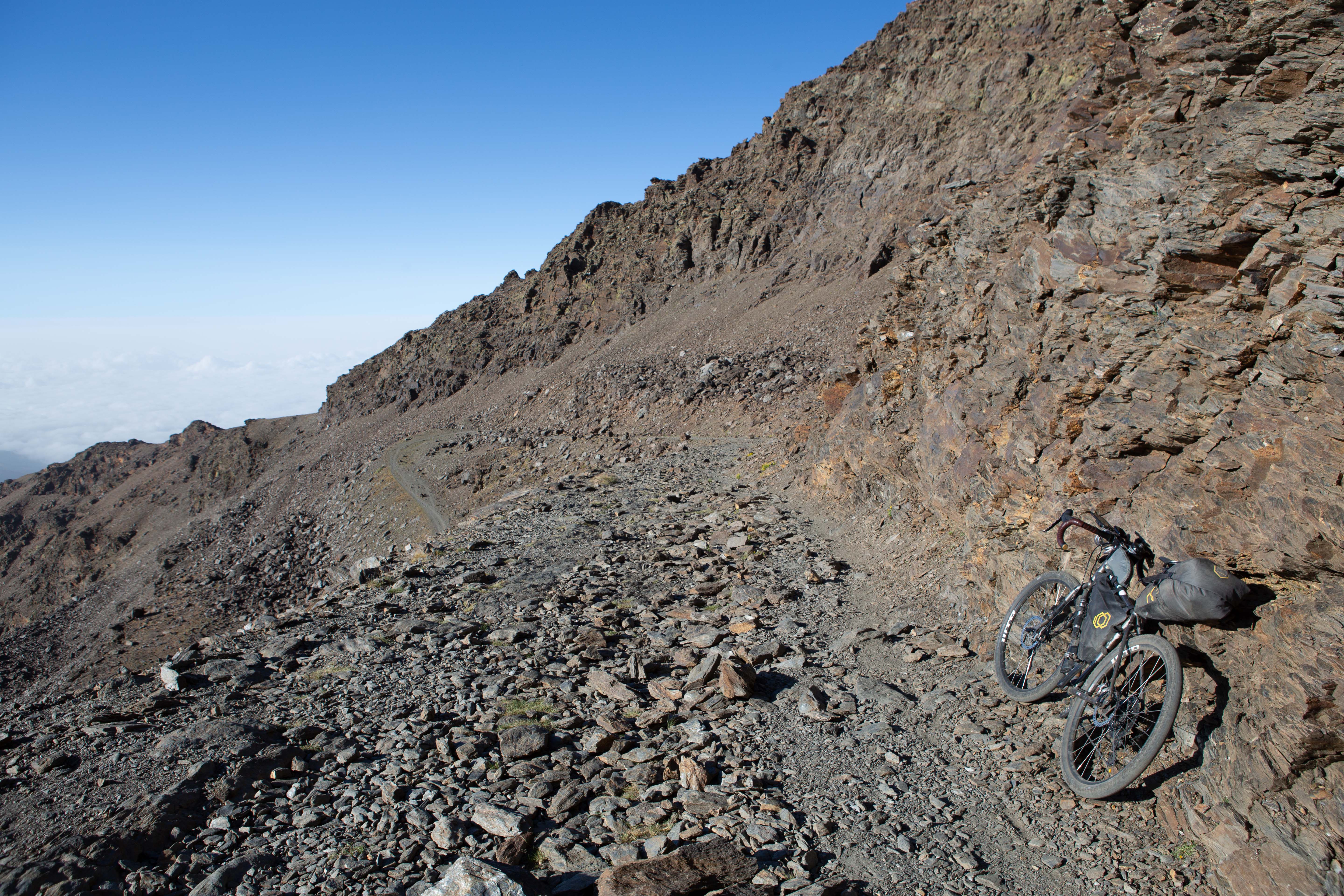
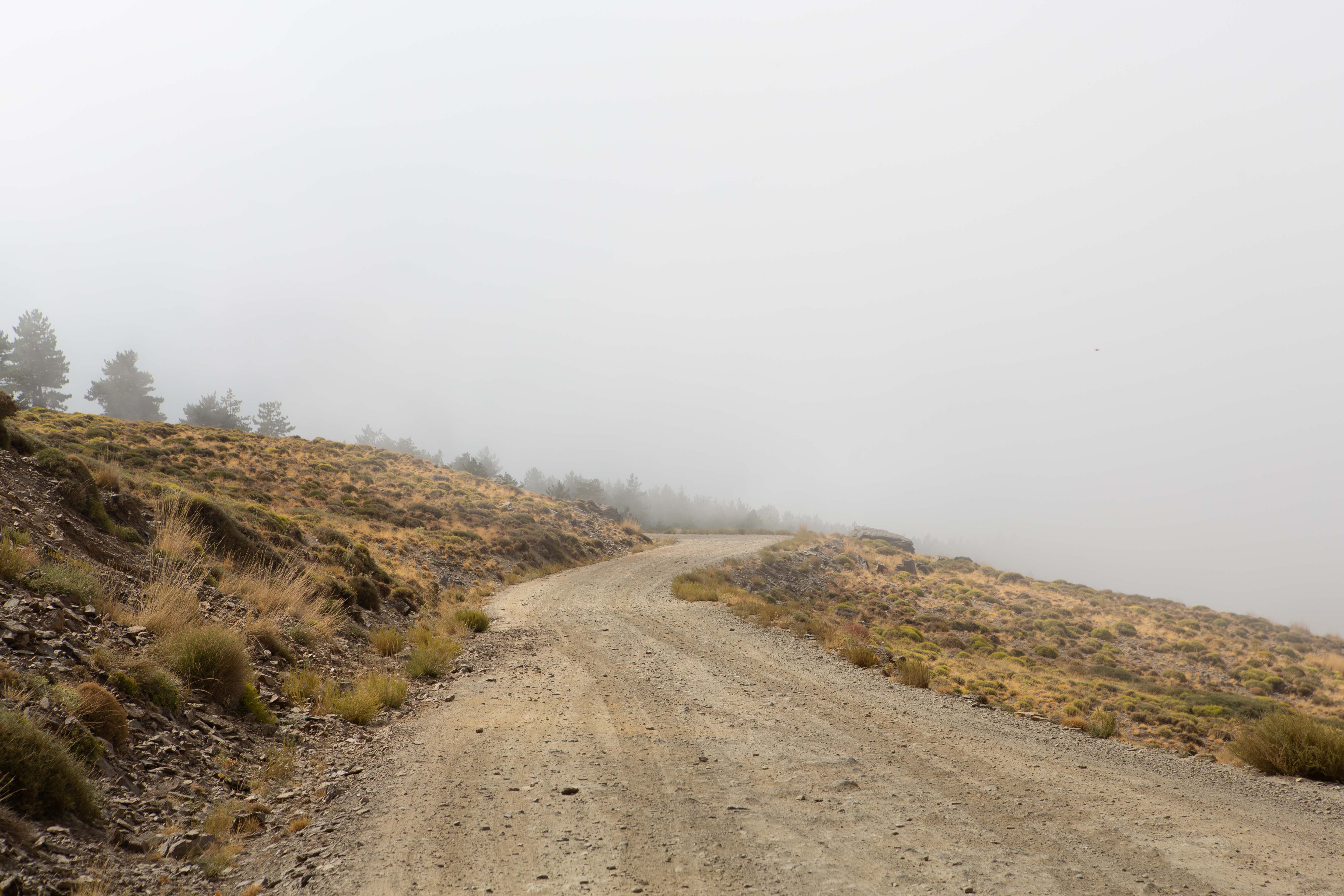
Eventually the rocky track smoothed out into a drivable dirt road, which I blasted down until I felt my rear wheel wobbling erratically. Air was blasting out of a large puncture. I spun my wheel, wondering where the sealant was while rummaging for a plug, but before long the tyre was pancake flat.

I swapped in a tube, embarrassed to find that there was barely a drop of sealant in the tyre. No wonder, really – the bike has been in my dad’s garage for the last few months throughout my ‘homeless’ summer. It took an eternity to pump up the tube, my pump seemed to be on its last legs, and I couldn’t get anywhere near enough air inside to reseat it. I suddenly felt silly for only having bought one tube, as I nervously descended the remaining section to Capeira.
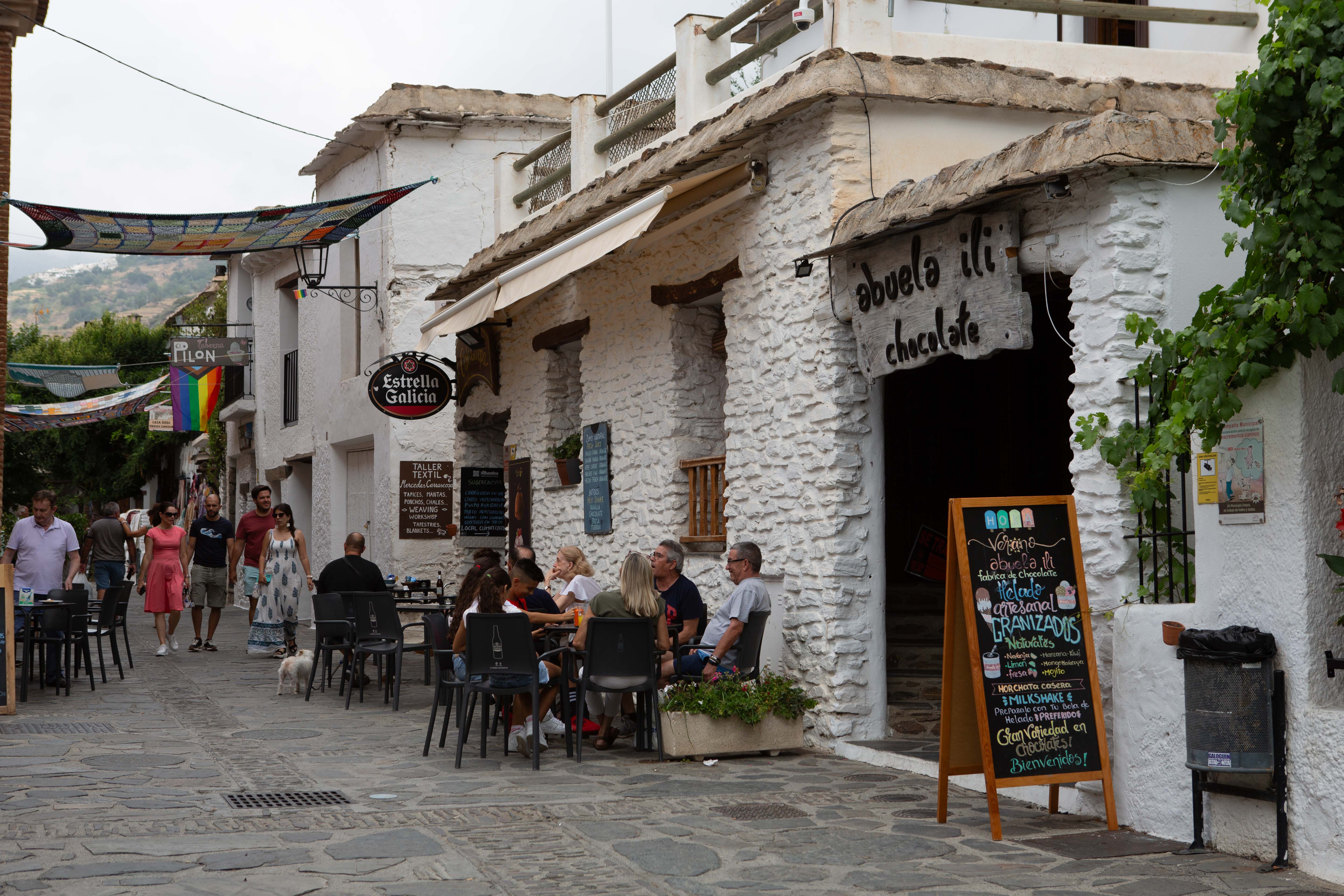
Capileira was a beautiful town, and it was a relief to be back in civilisation. I could see why this is such a special place to end the Badlands route and race. A charming village, with houses crammed in close together around picturesque plazas. The white buildings nestled between the mountains bought back good memories from my previous Andalucian adventure – riding from Seville to Malaga a couple of years ago. It’s a really beautiful part of Spain, and a very underrated region for cycling in Europe.

In a real stroke of fortune, I stumbled across a bike rental shop in a village down the road, run by some British expats, who sold me a couple of spare inner tubes and let me use their floor pump to seat my tyre properly. Once I trusted my bike again, I really let rip on the remaining descent and flew down the following miles imagining that I, too, was racing the rest of the peloton down the mountain.

In reality, it was of course just myself, as it had been most of the weekend. I did pass a few hikers making their way up towards Pico Veleta along the GR411 as I’d been riding down in the morning. More bizarrely, in the refuge I met another cyclist who just so happened to be doing the exact same two-day route that I was. It was odd, because we both seemed to have plotted it ourselves rather than it being an established route. He’d made the sensible decision to leave Granada at 6am to beat the heat, so he was probably in a better state when he’d reached the refugio at the top.

The last push back to Granada wasn’t anything to write home about. The closer I got to town, the more ugly the road became and the busier the traffic. That was to be expected. Still, what a ride. And how cool to have a high-mountain adventure like that so close to town. Granada is a very charming city, but the reason I’d like to return is the amazing riding right outside town. Well, that and the tapas, I confess.
You can find the route here.
 JKB's Bike Ride
One thought on “Pico Veleta: Exploring the Spanish Badlands (25/08/24-26/08/24)”